
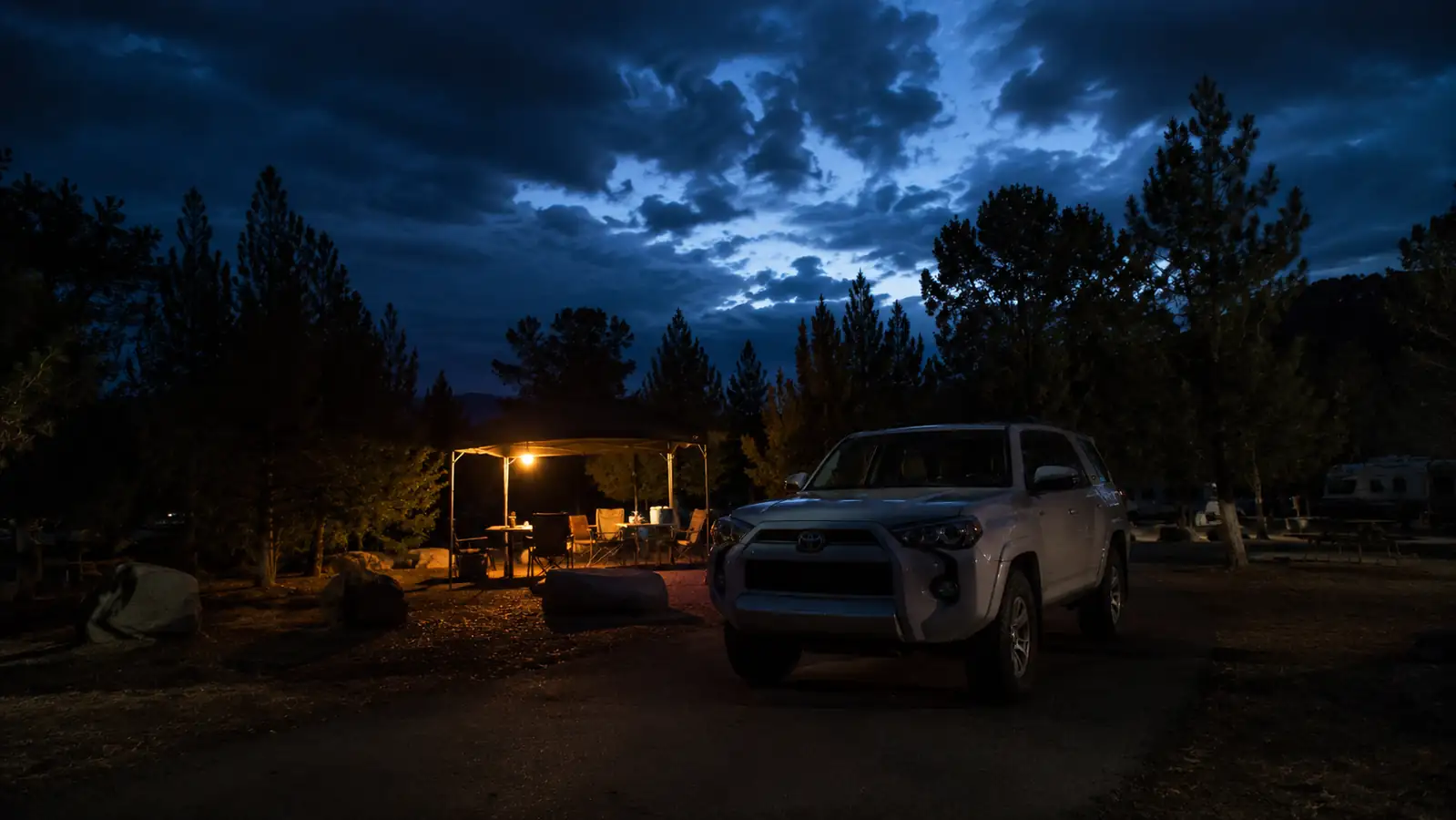
We were three nights into a long weekend at Beavers Bend when the sky turned that particular shade of green that makes every Oklahoman stop what they're doing and check their phone. Dana had already pulled the radar up before I said a word. A line of storms was tracking straight up from Texas, and the ranger driving the loop in his truck was telling folks to get their awnings down and their gear secured. Nolan and Ivy thought it was exciting. I thought about the tent stakes and whether I'd pushed them deep enough into ground that had already taken two days of rain.
The storm itself wasn't the worst one we've camped through. What made that night different was what happened after it passed. Around nine thirty, right as the wind was finally dying down, the whole loop went dark at once. Not a flicker, not a brownout, just gone. The only lights we had that didn't depend on that grid were the two EZORKAS lanterns charging in the truck. The overhead lights by the bathhouse, the little solar path markers, even the glow from other campers' plugged-in string lights and CPAP machines, all of it cut out the same second. Somewhere a transformer had taken a hit, and the campground's power was out for the night.
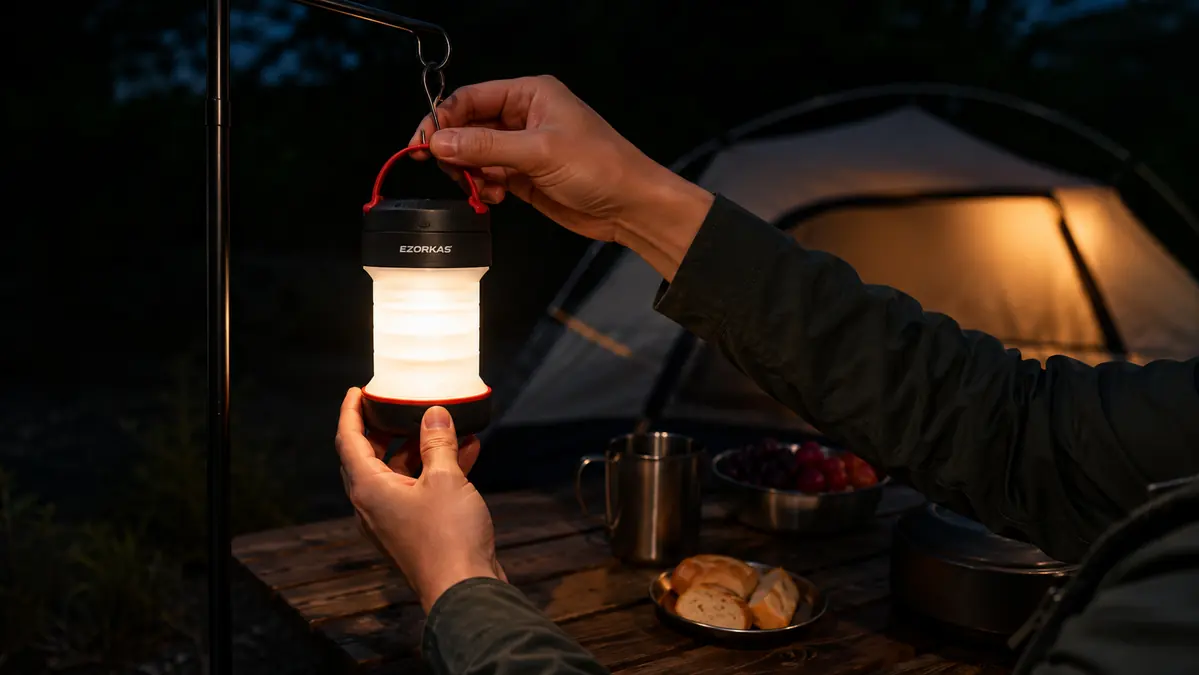
For about a minute, our site went as dark as everyone else's. Then I remembered the EZORKAS lanterns were sitting fully charged in the door pocket of the 4Runner, right where they'd been since we plugged them in Thursday night before we left the house. I grabbed both, and inside maybe ninety seconds our picnic table had light again.
That's the part I keep coming back to when I tell people about that trip. It wasn't dramatic. There was no scramble, no digging through bags by the glow of a phone screen with three percent battery left. One lantern went up on the awning hook over the picnic table, the other got hung inside the tent on the little loop above the door, and within minutes our site looked almost exactly like it had before the power went out. Everyone else's didn't.
Three sites over, a family was pointing their phone flashlights at each other trying to figure out where the bathhouse path even started. Ours looked like nothing had happened.
The lantern that kept working when the campground's power didn't
Two USB rechargeable EZORKAS lanterns, charged before we ever left the driveway, are the reason that outage was a non-event instead of a scramble. Check today's price on Amazon.
Amazon Check Today's Price on Amazon →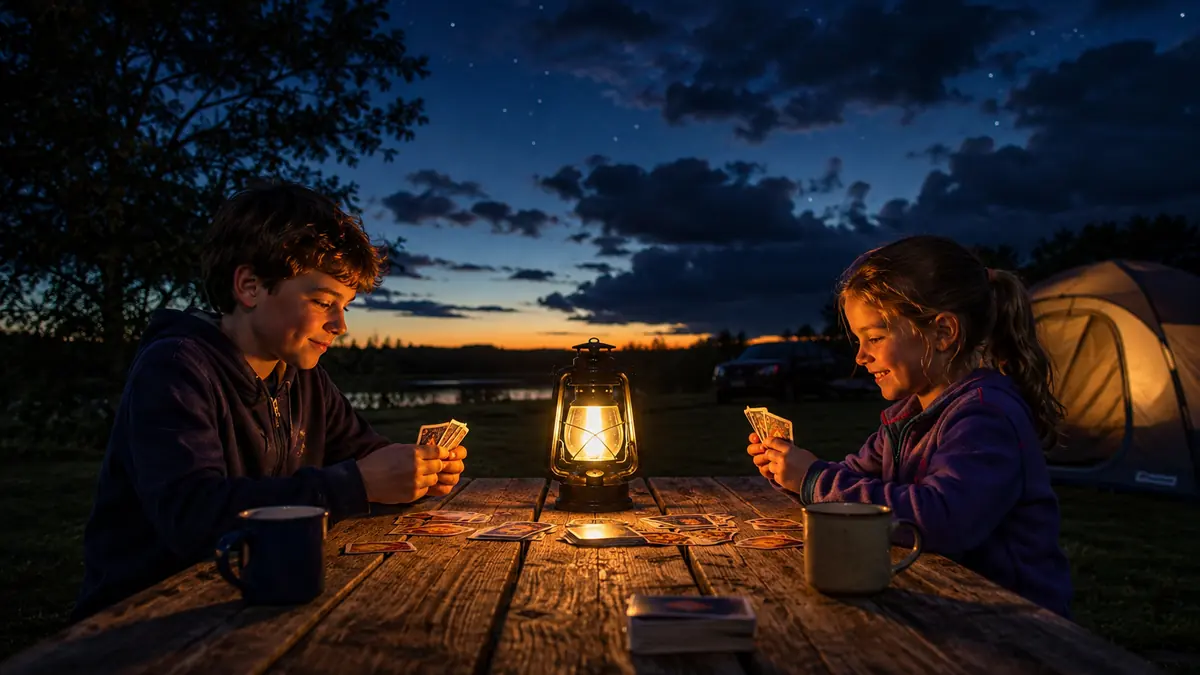
It's worth saying that we weren't the only prepared campers on the loop. A few sites had the big battery-powered lanterns you see at the hardware store, and those did fine too. But I watched at least four different families walk past our site that night on their way to the bathhouse, using our lantern glow as a landmark to find the gravel path, since the path lights themselves were dead. One dad asked me point blank what kind of lantern that was, standing there with his phone flashlight pointed at the ground and a kid tugging his sleeve.
What made it work wasn't luck. It was that the EZORKAS lanterns had been on the charger two nights before, the same routine we run before every trip regardless of whether a storm's in the forecast. I'll admit that habit came from a bad trip the year before, the one where I dug through three gear bags looking for a working flashlight and found nothing but dead batteries. After that, charging the lanterns became as automatic as loading the cooler. That night at Beavers Bend is exactly the scenario that habit was built for, even though I never expected the test to come from the campground's own power grid instead of our gear failing.
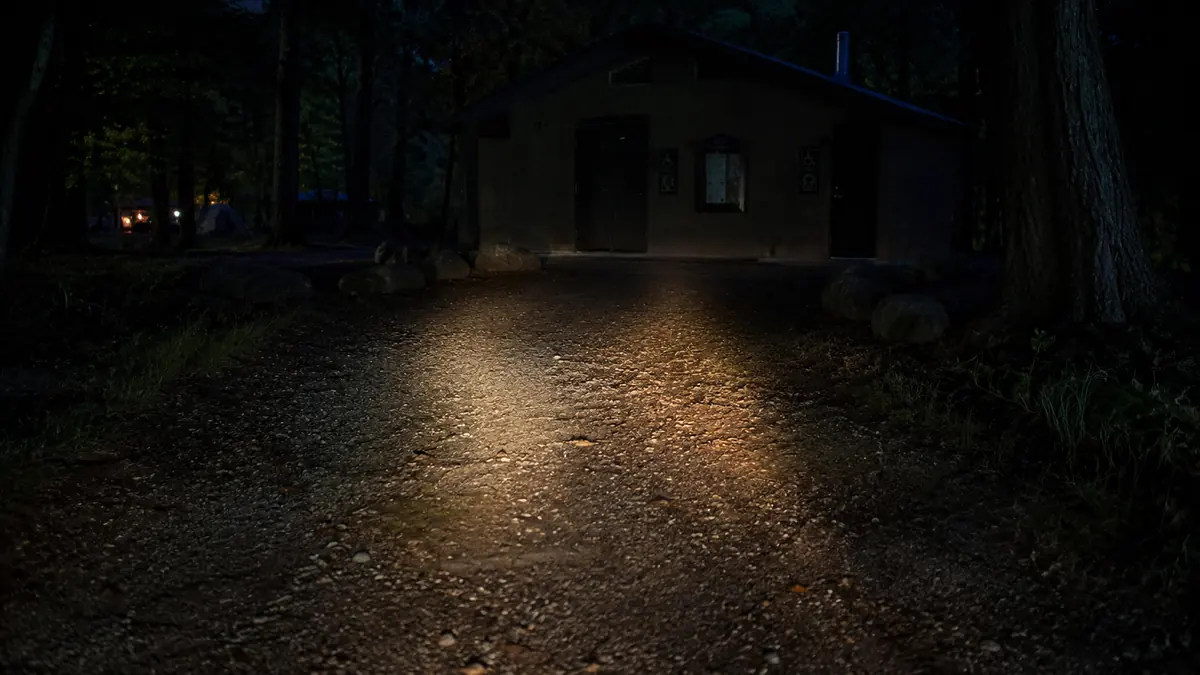
The kids handled it better than I expected, honestly better than I did. Ivy thought it was an adventure, sitting at the lit picnic table playing cards by lantern light while everyone else stumbled around with their phones. Nolan grabbed one of the lanterns, slid the flashlight collar into place, and walked a couple of the younger kids from a neighboring site down to the bathhouse and back, playing tour guide with a beam of light like it was the most natural thing in the world. Dana just kept saying she couldn't believe the campground didn't have some kind of backup lighting for a busy weekend loop. I couldn't either, but I also wasn't going to complain about it once I realized our gear had it covered.
Power came back around midnight, and honestly it was almost a letdown. The path lights popped back on, the hum of everyone's plugged-in gear started up again, and the loop went back to looking like a normal campground. We kept the EZORKAS lanterns burning at our site a while longer anyway, mostly out of habit at that point.
What I'd Tell You If We Were Sitting at My Kitchen Table
If you asked me whether a rechargeable lantern is worth carrying when most campgrounds have electric hookups anyway, I'd tell you that's exactly the kind of thinking that leaves you standing in the dark. You don't plan around the power going out. It just does, and usually at the worst possible time, on the worst possible night, with two kids who still need to find the bathroom. I'm not going to tell you a lantern is some kind of survival gear, because it isn't. It's just a light that works when you need it to, charged and ready before you ever pull out of the driveway. That's a pretty small thing to get right, and it's the reason that whole storm is a good memory instead of a bad one.
Don't find out your lantern's dead at the worst possible moment
Two EZORKAS lanterns, charged before every trip, have kept our site lit through storms, outages, and everything in between. See today's price on Amazon.
Amazon Check Today's Price on Amazon →