
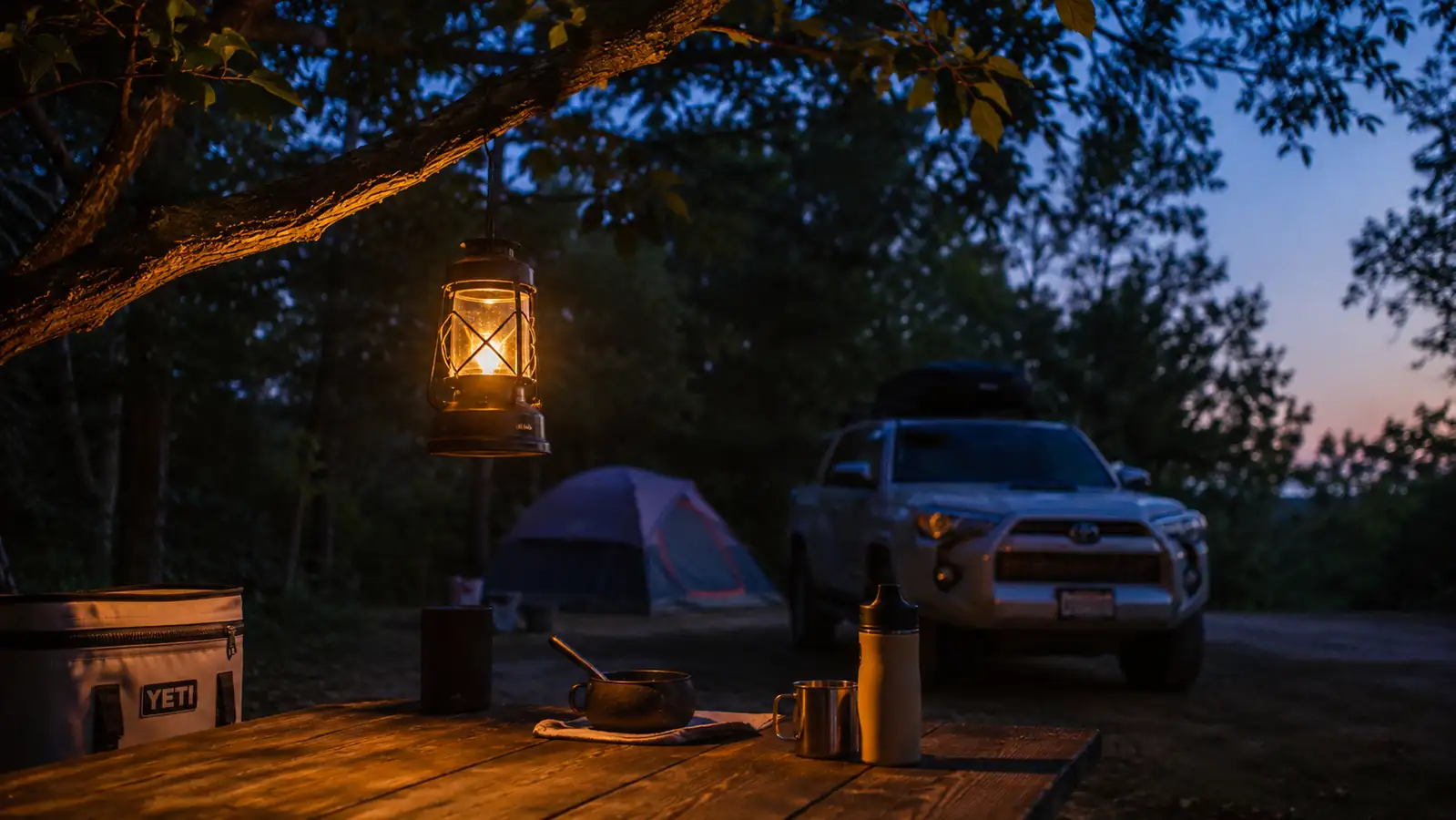
We picked up the 2-pack of EZORKAS rechargeable lanterns in early spring after a trip to Lake Tenkiller where I dug through three different gear bags looking for a working flashlight and came up with two dead ones and a headlamp with a cracked lens. That was the trip where Ivy needed the bathroom path lit at 11pm and I was standing there shaking a D-cell flashlight like that was going to fix anything. I ordered the lanterns that Monday. They've been on every single trip since, riding in the same door pocket of the 4Runner as the tire gauge and the extra tent stakes.
This isn't a spec-sheet writeup where I quote lumens and call it done, though I'll get to the numbers because they matter. What I actually care about is whether a lantern that promises USB rechargeable convenience holds a charge through a full weekend, whether the battery backup mode is actually useful or just a marketing bullet point, and whether EZORKAS built something that survives a season of being clipped to a tent pole, dropped on gravel, and left running all night more than once because somebody forgot to turn it off. Here's what happened over roughly a dozen trips.
Quick Verdict
The Quick Verdict
A genuinely useful 2-in-1 lantern that solved our dead-battery problem for good, with real limits on max brightness and a magnet base that's stronger in theory than on a thin tent pole.
Amazon Check Today's Price →The lantern that finally stopped the flashlight scavenger hunt at 11pm
After a full season lighting up basecamp for a family of four, the EZORKAS 2-pack is still riding in the door pocket every trip. Check today's price and current stock on Amazon.
Amazon Check Today's Price on Amazon →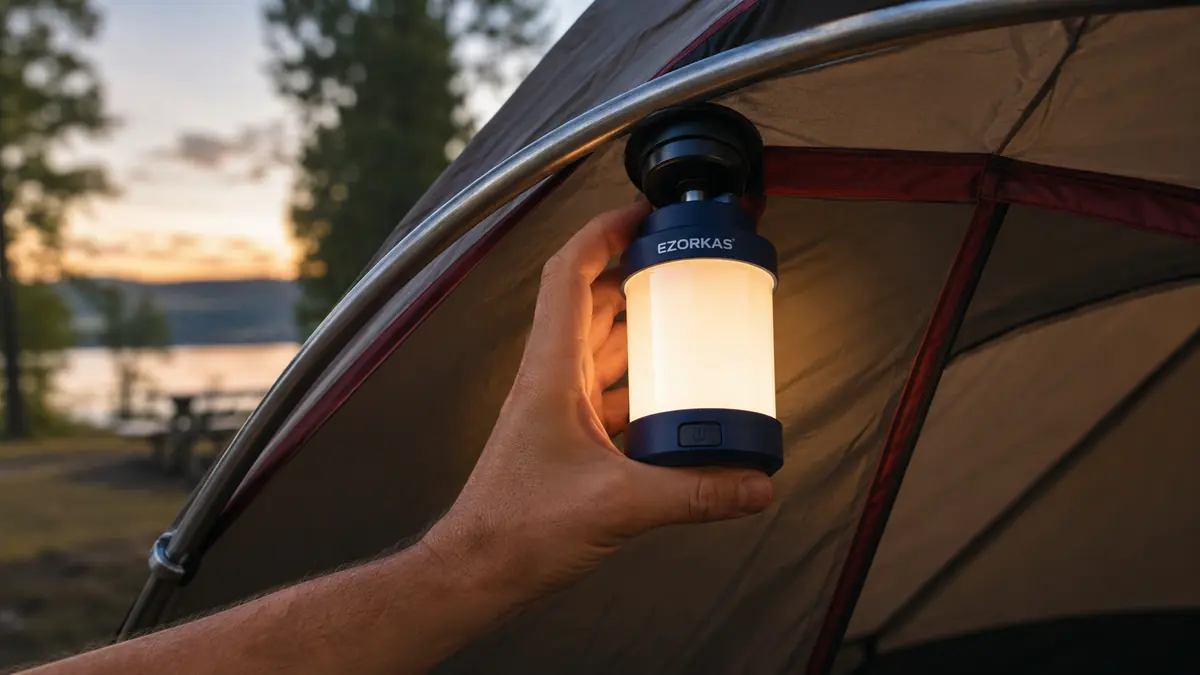
How I've Used It
We've run the EZORKAS lanterns at Lake Tenkiller twice, Beavers Bend once, a weekend at Osage Hills, and a couple of quick overnighters at Keystone Lake when Dana wanted to get the kids out without a big production. That's about twelve trips over six months, and on nearly all of them both lanterns got used at once, one hanging over the picnic table and one either inside the tent or clipped near the cooking area. The two-lantern setup turned out to matter more than I expected going in. One light source for a family of four means somebody's always in the dark. Two means the picnic table and the tent interior can both be lit without anybody carrying a flashlight between them.
The routine's simple. Both lanterns go on the charger the Thursday before a trip, usually plugged into the same USB block I use for my phone, and they're topped off by the time we load the 4Runner Friday afternoon. At the site, one gets hung from a tree branch or the awning of the Skydome using its built-in hook, and the other gets its magnet base pressed onto whatever metal surface is nearby, usually the cooler handle or a tent pole. Ivy figured out within one trip that she could stick it to the metal frame of the picnic table bench, which honestly worked better than my tree-branch method most nights.
What sold me early was the flashlight mode. Each EZORKAS lantern collapses down and the top panel slides off to reveal a focused flashlight beam, so instead of packing a separate flashlight for the walk to the bathroom, we just grab a lantern, slide the collar, and use it as a beam. Nolan's taken over that job most trips now, walking Ivy down the path with one of the lanterns doing double duty as both her nightlight back at camp and his flashlight on the walk.
Brightness Claims Versus What I Actually Measured
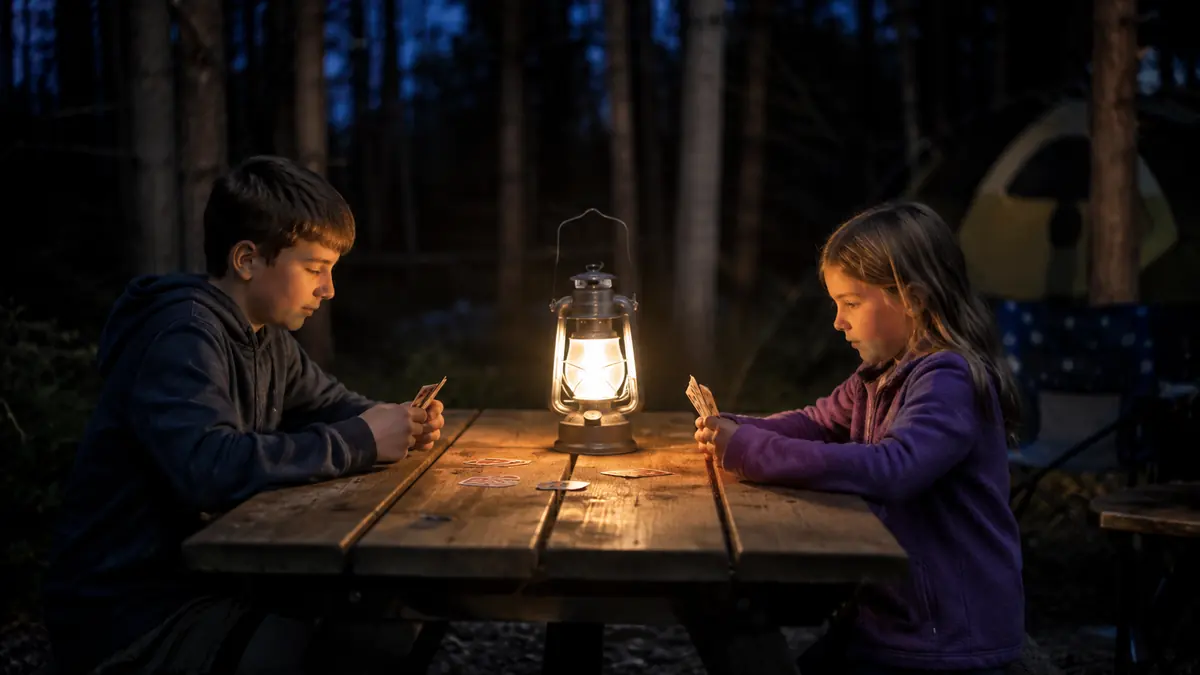
The listing advertises a bright high setting, and it is genuinely bright enough to light the whole picnic table area with room to spare, plenty for card games, cooking, or reading a map at night. Where I want to be honest is that the jump between settings isn't as smooth as I expected. Low mode is dim, more of a soft nightlight glow than a working light, fine for a kid who wants a little ambient glow to fall asleep by but not enough to read a book. Medium is where we run the lanterns almost all the time, bright enough to eat dinner by and see faces clearly, without draining the battery as fast as high mode does.
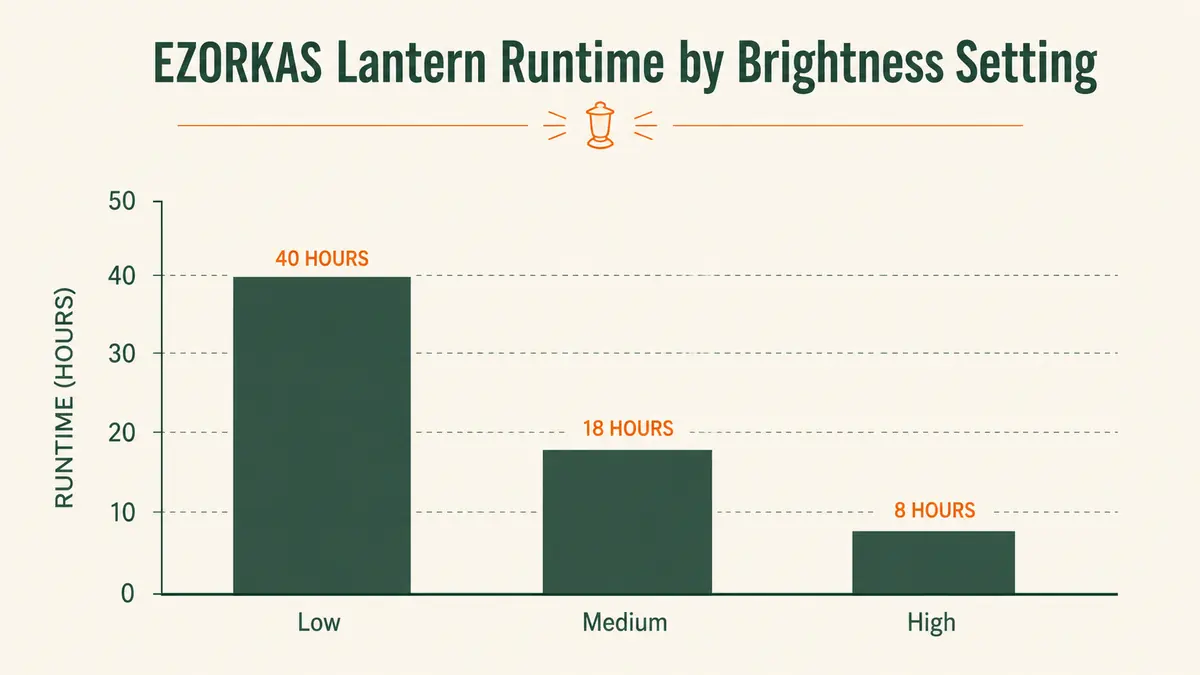
I started timing runtime on my phone after the second trip, mostly because I wanted real numbers instead of trusting the marketing copy. On high, the lantern ran a little over eight hours before dimming noticeably, which lines up close to what EZORKAS claims. On medium, it stretched to somewhere around eighteen hours, and on low, it kept going well past forty hours, long enough that I stopped tracking it and just assumed it'd still be glowing whenever we broke camp. The chart below shows how those three settings compare, and it's the reason we default to medium on every trip now. It's the sweet spot between real usable light and not needing a recharge halfway through a three-day weekend.
USB Rechargeable and the Battery Backup Mode
The whole reason we bought these was to get away from disposable batteries, and on that front EZORKAS delivered exactly what it promised. A full charge from a standard USB port takes a few hours, and I've never had one die on a trip when it started fully charged. What I didn't expect to use as much as I do is the battery backup feature, which lets you drop in regular AA batteries as a fallback if you forget to charge the lantern or run out of juice mid-trip. That happened once, on the Osage Hills trip, when I'd been in a hurry packing and grabbed a lantern straight off the charger without checking the indicator light. It was actually only half charged and died the second night. I had AAs in the truck's glovebox for exactly this reason, popped them in, and had light again in under a minute.
That 2-in-1 design is the feature I'd point to first if someone asked why this lantern over a cheaper rechargeable-only option. Rechargeable is the everyday mode and it's what we use ninety percent of the time, but the AA backup means a dead charge or a bad USB cable at the campsite doesn't turn into a dark night. EZORKAS clearly designed this for people who camp regularly enough to know that gear fails at the worst moment, not for someone buying a lantern for one trip and forgetting about it in a closet after.
The Magnet Base and Hanging Hook in Real Use
The magnet base is a genuinely clever idea and it works well on the right surface. Stuck to the metal legs of our picnic table or the side of the rolling cooler, it holds firm even when the table gets bumped during dinner cleanup. Where it disappointed me a little is on thinner metal, like the pole frame of the Skydome tent. The magnet's strong enough that it doesn't slide, but on a pole that flexes when someone brushes past the tent wall, the lantern can wobble more than I'd like. It's never actually fallen off, but I've watched it sway enough on a windy night at Beavers Bend that I switched to the hanging hook instead for anything tent-related.
The hook itself is simple and sturdy, a folding metal loop at the top of the lantern that clips over a branch, a tent guy line, or the crossbar of a camp awning. That's become our default for the picnic table light, hung from a low branch a few feet overhead so it casts light down without anyone's head being right next to the bulb. Between the hook and the magnet, EZORKAS gave us two genuinely useful mounting options, even if the magnet is better suited to thicker metal surfaces than a tent pole.
Durability After a Season of Real Use
A lantern that lives in a door pocket for six months takes a different kind of abuse than one that stays boxed up in a closet, so this is the part I paid closest attention to. Both lanterns have been dropped, more than once, onto gravel at Keystone Lake and once off the picnic table entirely when Ivy knocked it reaching for the ketchup. Neither cracked. The plastic housing has picked up a few scuffs and one small chip on the base of the lantern that took the picnic table fall, but the light itself, the charging port, and the switch have all kept working the same as day one. That's a better outcome than I expected from a plastic-bodied lantern at this price.
The rubber seal around the charging port has stayed intact through some genuinely damp mornings, including a foggy start at Beavers Bend where everything in camp, including the lanterns, was beaded with condensation by sunrise. Neither lantern has shorted out or acted glitchy afterward, and the collapsible flashlight collar still slides smoothly with no grinding or catching, even after being folded and unfolded probably fifty times over the season. The only real weak point I'd flag is that light-duty plastic housing. It's held up so far, but I wouldn't trust it to survive a hard drop onto rock the way I'd trust a rubberized or metal-bodied lantern, so I've started keeping both in a soft pouch during transport instead of just tossing them loose in the door pocket.
Alternatives I Considered Before Buying
Before landing on the EZORKAS 2-pack, I looked at a couple of single-lantern options from bigger camping brands, mostly because they showed up first in search and I trusted the name. Most of them ran a little higher on advertised max brightness, but they were rechargeable only, no battery backup, and buying two of them to get the same setup we ended up with from EZORKAS would have cost noticeably more. I also considered just sticking with headlamps, since we already owned a couple, but a headlamp lighting one person's face isn't the same as a lantern lighting a whole picnic table, and headlamps don't do much for the kid who's sitting still trying to read a comic book by the fire.
The 2-pack format ended up being the deciding factor. One lantern for the tent and one for the cooking and eating area solved a problem we didn't fully realize we had until we had two lights working at once instead of shuffling a single one back and forth all evening. A season later, I'd still make the same call, and if one lantern ever does fail outright, having the spare already in rotation means we're not scrambling to replace it mid-trip.
What I Liked
- USB rechargeable with a AA battery backup means a dead charge never leaves you in the dark
- Two lanterns in one purchase covers both the tent and the picnic table without shuffling one light around
- Medium setting runs close to eighteen hours, plenty for a full weekend without recharging
- Flashlight mode doubles as the bathroom-path light, one less thing to pack
- Hanging hook is sturdy and works well over a branch, guy line, or awning bar
- Survived multiple drops onto gravel with no cracks and no loss of function
Where It Falls Short
- Low setting is closer to a nightlight glow than a real working light
- Magnet base wobbles on thinner metal like a tent pole frame, better suited to thicker surfaces
- High setting drains in a little over eight hours, so it's not an all-night option at full brightness
- Plastic housing feels light duty, not something I'd want to drop repeatedly on rock
I was standing there shaking a dead D-cell flashlight like that was going to fix anything. I ordered the lanterns that Monday.
Who This Is For
If you're tired of digging through a gear tub for working batteries every trip, or if you're feeding, bathing, and settling more than one kid into a tent at night, the EZORKAS 2-pack solves a real problem. Having two lanterns means the tent and the picnic table can both be lit at once, and the AA battery backup means a forgotten charge doesn't end your evening early. Anyone doing basecamp-style car camping who wants dependable light without babysitting a single point of failure will get real use out of these.
Who Should Skip It
If you need a lantern bright enough to light up a large group site or work as your only all-night light source on the highest setting, this isn't quite that lantern, high mode runs out in a little over eight hours. And if you're planning to mount it primarily on a thin tent pole rather than a thicker metal surface or the hanging hook, expect some wobble. For a family doing weekend car camping trips who wants two reliable, rechargeable lights that won't leave anyone in the dark, it's an easy recommendation.
One season, a dozen trips, still no more dead-battery scrambles
If you want light at basecamp without digging through a bag of dead batteries, the EZORKAS 2-pack has earned its spot in our door pocket. See today's price on Amazon.
Amazon Check Today's Price on Amazon →