
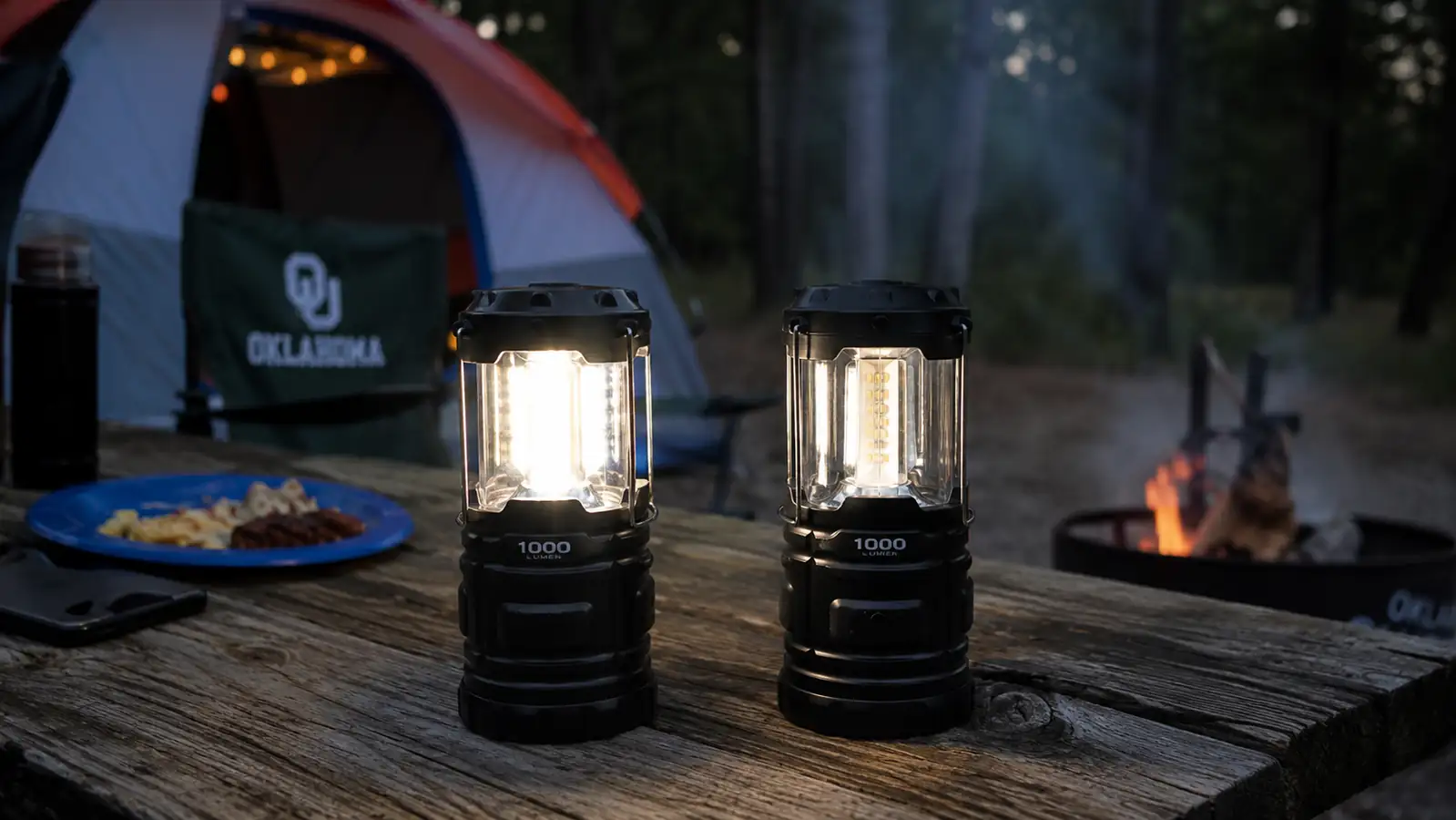
The night before our Turner Falls trip this June, I set both lanterns on the kitchen counter to charge and then completely forgot to plug them in. I didn't realize it until we were setting up camp near the creek and Ivy asked me to turn on 'the tent light' and nothing happened. Not a flicker. Both lanterns sat there dark while Nolan dug through the truck for headlamps we hadn't packed since spring, muttering that this was exactly why he liked the old battery flashlights better.
That moment tells you more about what these EZORKAS lanterns are actually worth than the Amazon listing ever will. This isn't the season-long breakdown, that's a different piece on this site. This one is about the stuff nobody mentions before you click buy: the brightness number that doesn't actually exist on the EZORKAS listing, the fact that the two lanterns in the same pack don't perform quite the same, and what really happens the one time you blow the charging routine.
Quick Verdict
The Quick Verdict
A solid budget lantern once you understand it doesn't quite deliver an even, identical pair, and that the charging routine is on you, not the lantern.
Amazon Check Today's Price →Before you buy, know what the listing photos don't show you
This is the honest version, gaps included. If you still want it after reading, here's today's price and current stock on Amazon for the EZORKAS 2-pack.
Amazon Check Today's Price on Amazon →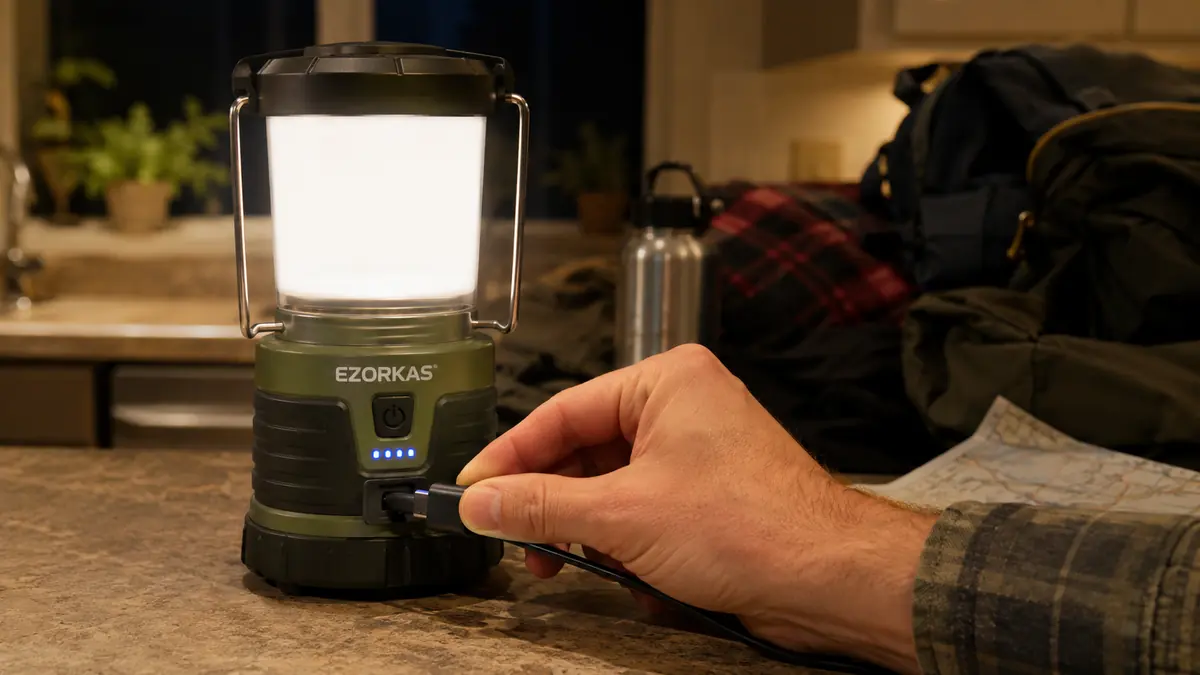
How I Actually Tested This
I've been running these lanterns since spring, and I went into this second pass looking for gaps instead of wins. I took both lanterns on a trip to Robbers Cave in April, back to Turner Falls in June, and on a repeat weekend at Keystone Lake in early July, and this time I charged them together, ran them side by side on the same setting, and paid attention to whether Lantern A behaved the same as Lantern B. Most reviews of a 2-pack treat the two units as interchangeable and move on. I wanted to know if that assumption actually holds up once you look closely instead of just glancing at both lanterns glowing on the table and calling it good.
The other thing I did differently was stop trusting the product photos as a brightness reference. Anyone who's shopped for a lantern online knows the listing images always look brighter than reality once you're standing in an actual dark campsite with your phone battery at eleven percent and no porch light for a hundred yards in any direction. So instead of comparing the lantern to a marketing photo, I compared it to what we actually needed to see the picnic table, read a face across the fire, and walk a gravel path without pulling out a phone flashlight as a backup.
I also asked Dana and the kids what they noticed without prompting them toward any particular answer, since I've learned my own opinion of a piece of gear gets skewed by wanting the purchase to have been a good one. What follows is what actually showed up over those three trips, not a defense of the purchase and not a takedown either. Some of it will make you more confident buying this lantern. Some of it will change how you use it once it's in your gear tub.
The Brightness Number That's Not on the Listing
Here's something worth knowing before you buy. The Amazon listing for the EZORKAS 2-pack never actually states a lumens figure anywhere in the title, bullet points, or description. It calls the lantern bright, it shows a glowing bulb lighting up a tent interior in the product photos, but there's no hard number to hold it to. That's not necessarily a red flag, plenty of budget lanterns skip the spec entirely, but it does mean you're buying based on trust rather than a measurable claim, and it means any brightness complaint you read in the reviews is somebody's subjective impression, same as mine here.
In practice, the high setting is genuinely enough to light a full picnic table with room to spare, and I'd call that consistent with what the photos imply. Where the gap shows up is at the edges of that light. Stand ten or twelve feet away from the lantern at Robbers Cave and the light falls off fast, more like a warm circle than the wide, even glow the marketing images suggest. It's not dim, it's just more localized than the photos make it look. If you're expecting it to light an entire group campsite the way a lantern-shaped porch light would, it won't. If you're expecting it to light one table and the immediate area around it, it does that well, and that's really the honest bar to measure it against.
The Two Lanterns Aren't Identical
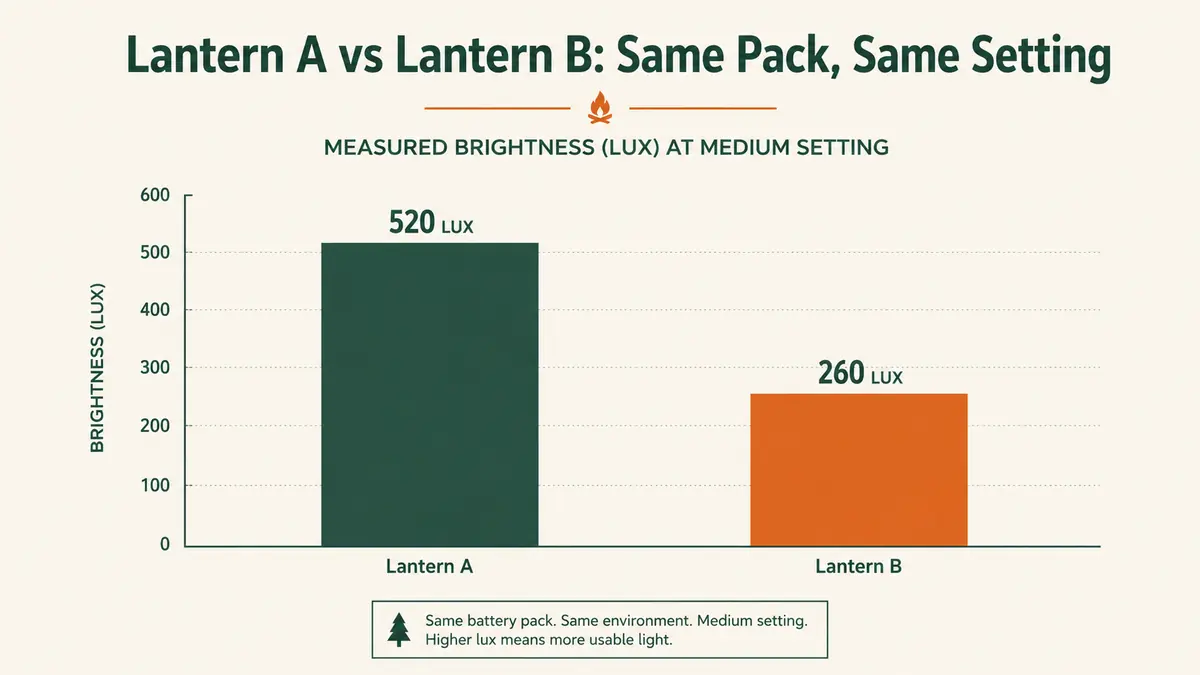
This is the part that surprised me most and the reason I ran this side-by-side test in the first place. On the medium setting, with both lanterns fresh off the same charging cable, one of ours is visibly brighter than the other. Not dramatically, not enough that I'd call either one defective, but enough that Dana noticed it unprompted at Keystone Lake and asked if I'd swapped batteries in one of them. I hadn't. It's just a small manufacturing variance between two units that came out of the same box, the kind of thing you'd never catch unless you set them next to each other on purpose.
I put a light meter app on my phone and checked both lanterns from the same distance, same setting, same angle, and the difference held up across three separate checks, not just a one-time fluke. It's small enough that if you only ever used one lantern at a time, you'd probably never notice. But if you're buying this specifically because a 2-pack means matched lighting for the tent and the picnic table, know that matched is a loose term here. We've settled into using the slightly brighter one for the picnic table where we actually need to see faces and read labels, and the dimmer one for inside the tent as a nightlight, which honestly plays to its strength anyway.
I don't think this is a dealbreaker, and I haven't seen anyone else flag it directly in the reviews, which is exactly why it belongs in an honest writeup instead of getting glossed over. Budget electronics made in bulk are going to have some unit-to-unit variance, that's just how mass manufacturing at this price works. What's worth knowing is that it's real, it's not user error, and it's worth checking your own pair side by side once instead of assuming they're perfectly matched right out of the box.
What Happens When You Forget to Charge It
Back to that dark tent at Turner Falls. This lantern is built as a 2-in-1, USB rechargeable as the main mode with a AA battery slot as backup, and the whole point of that design is supposed to be that a dead charge doesn't ruin your night. It doesn't, but it's not automatic either. The AA compartment on both of ours was empty, because I'd never actually loaded batteries into the backup slot. I'd just assumed the lanterns would always be charged when we left the house, which is a fair assumption right up until the one time it isn't true and you're standing in the dark proving yourself wrong.
So the honest answer to what happens when you forget to charge it is nothing happens, unless you've also stocked the battery backup ahead of time. The feature only bails you out if you've prepped it in advance, which is a step easy to skip because it feels redundant when the lantern's already charged and sitting on the counter looking ready to go. We ended up using headlamps for that first night at Turner Falls and drove twelve minutes to a gas station the next morning for a pack of AAs, which fixed the problem for the rest of the trip but wasn't exactly the seamless backup I'd pictured when we bought these two lanterns for exactly this kind of situation.
Since then, I keep a spare 4-pack of AAs in the same door pocket as the lanterns, batteries already loaded into both units at all times, not just carried loose in the packaging. That's the actual fix, and it's not something the packaging or the listing tells you to do. The backup mode is real and it works fine once batteries are in the slot, but treating it as automatic protection is the mistake, and it's an easy one to make on a busy Thursday night when you're packing for a trip and not thinking about worst-case scenarios.
The Hurricane Shape Is Function, Not Just Looks
The old-timey hurricane lamp look on these lanterns isn't just a style choice, and I didn't fully appreciate that until I compared it against a plain cylindrical lantern a neighbor had set up at Keystone Lake. The tapered globe shape spreads light out in a full 360 degrees instead of throwing it mostly downward or forward, which is why it works so well sitting in the center of a picnic table with people on every side. Everyone gets even light instead of half the table sitting in shadow while the other half squints.
The tradeoff is that the same shape that makes it good as an ambient table light makes it a weaker flashlight than a dedicated one. When you slide the collar down to switch to flashlight mode, the beam is usable but noticeably less focused than a real flashlight, more of a wide flood than a tight beam. For walking a gravel path at night, wide and even actually beats a narrow tunnel of light anyway, so I don't count this against it much, but if you're picturing a true spotlight beam for finding something specific in the dark, that's not really what this shape is built to do.

Price Point Honesty: What You're Actually Paying For
At the EZORKAS price point, you're getting two lanterns for less than a single lantern costs from some of the bigger camping brands, and the plastic housing shows it. It's light, a little hollow-feeling when you tap it, and not something I'd trust to survive a hard drop onto rock the way I'd trust a rubberized, single-unit lantern that costs three or four times as much. That's a fair tradeoff to understand going in rather than discover the first time you knock one off the tailgate at a rocky site.
What you're also paying for, and what I think gets undersold, is the combination of features packed into that price. USB rechargeable, AA backup, a collapsible flashlight mode, a magnet base, and a hanging hook, all in two units for a budget-friendly price, is genuinely hard to match. A single premium lantern with half those features easily costs what both of these run together. The honest read is that EZORKAS isn't trying to be the toughest lantern on the market, it's trying to be the most useful one for the money, and on that measure it mostly delivers, quality control gap and forgotten-charge trap included.
What I Liked
- Genuinely useful combination of features for the price, USB rechargeable, AA backup, flashlight mode, magnet base, and hook
- Hurricane shape spreads light evenly around a picnic table instead of throwing it in one direction
- High setting is bright enough for real table use, close to what the listing photos imply
- AA battery backup does work once you've actually loaded batteries into the slot ahead of time
Where It Falls Short
- No lumens number listed anywhere, so brightness expectations are set by trust rather than a spec
- The two lanterns in the same pack are not identically bright, a small but real manufacturing variance
- The AA backup only protects you if you remember to stock it in advance, it's not automatic
- Light falls off faster than the marketing photos suggest once you're more than ten feet away
- Plastic housing feels light duty for anyone planning to camp somewhere rockier than a state park
The honest answer to what happens when you forget to charge it is nothing happens, unless you've stocked the battery backup ahead of time too.
Who This Is For
If you want a budget-friendly, genuinely feature-packed pair of lanterns and you're willing to run a quick brightness check on your own pair and load the AA backup ahead of every trip, this is a smart buy. It's built for a family that camps regularly enough to know gear needs a system around it, not just a purchase. Treat the battery backup as a step you do before every trip, not a safety net that's already there, and it earns its spot in the gear tub trip after trip.
Who Should Skip It
If you want a lantern with a guaranteed brightness spec you can compare against other products on paper, or two lights that perform identically out of the box without any checking on your part, this isn't quite that lantern. And if you're the type who'll buy it, toss it in a bag, and forget about the AA backup entirely, you'll end up in the same dark tent we did at Turner Falls. For anyone willing to build one small habit around it, batteries loaded, charge checked the night before, the EZORKAS 2-pack still earns its keep.
Now you know the gaps, here's what you're actually deciding on
Two lanterns, a real feature set, and a couple of honest quirks worth knowing before it ships. Check today's price and current availability on Amazon.
Amazon Check Today's Price on Amazon →