
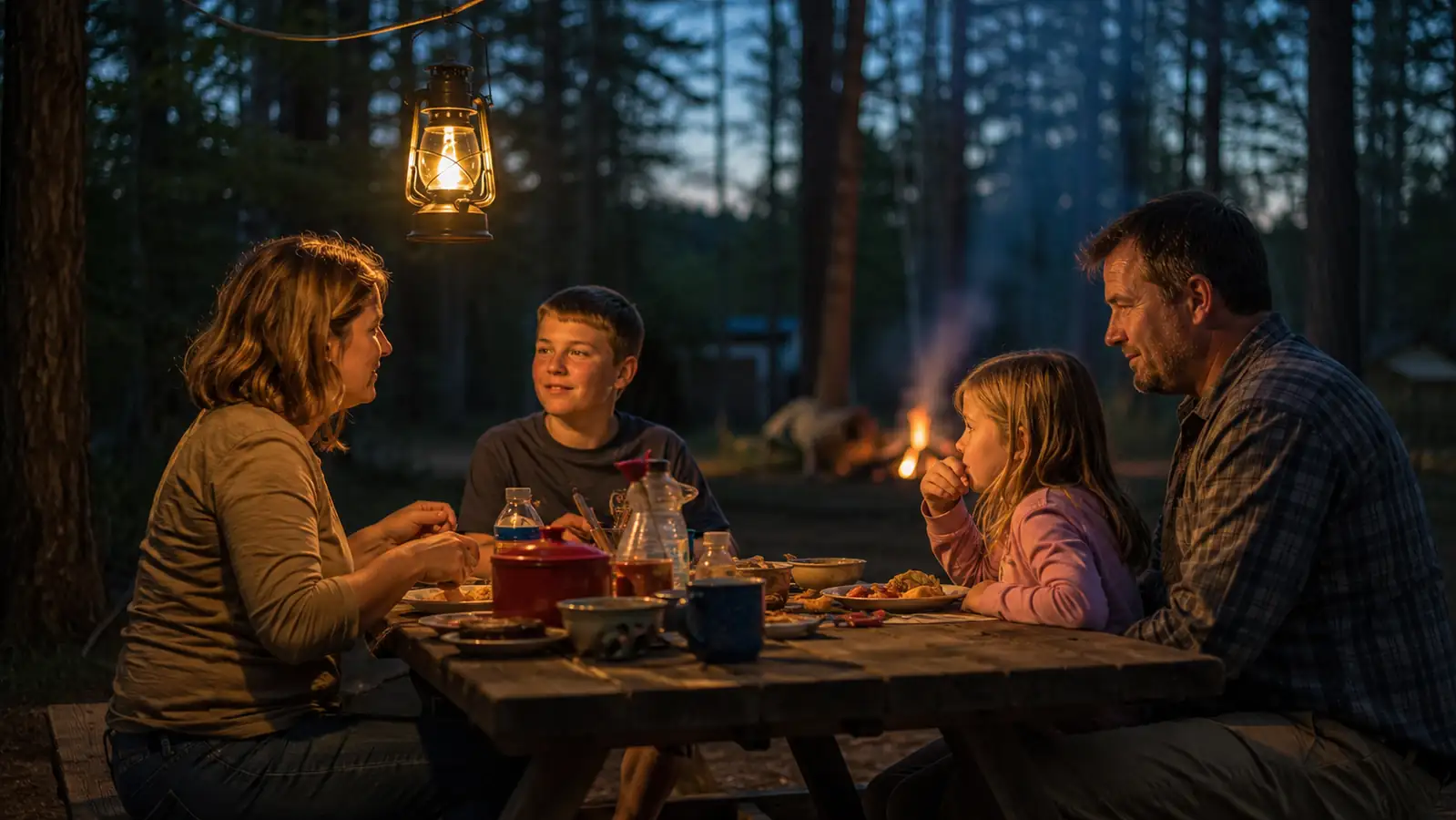
Last fall at Beavers Bend, our campsite looked like a game of where's the flashlight for the first two hours after sunset. Nolan, my 11 year old, had one flashlight. Ivy, who's 8, had another. Dana had the good headlamp she keeps for herself, and I was digging through the back of the 4Runner for whatever was left in the console. By the time everybody had a light source pointed somewhere useful, dinner was cold and somebody had already stepped in the dish bin. That trip is what convinced me car camping with two kids does not need five separate light sources everybody grabs and loses.
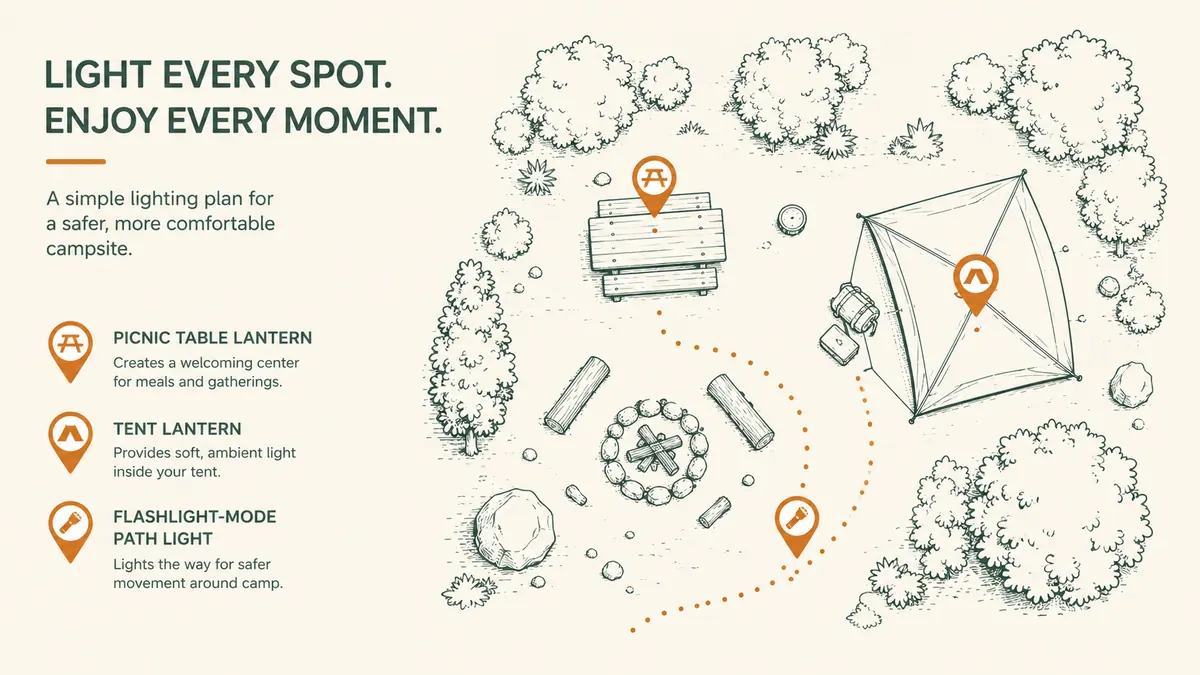
What actually fixed it was simpler than I expected. Two rechargeable lanterns, placed in specific spots before the sun goes down, instead of a pile of flashlights that gets picked through and scattered within the first ten minutes. I picked up a two pack of EZORKAS rechargeable lanterns after that Beavers Bend trip, mostly because they were cheap enough to risk on a family of clumsy campers, and they have not left the back of the 4Runner since. This is not a review of the lanterns themselves, we've got one of those elsewhere on the site. This is the actual setup, step by step, that gets a family campsite lit in about ten minutes flat, from the picnic table to the tent to the path to the bathroom.
It wasn't even that we lacked gear. We had plenty of flashlights, a couple of headlamps, and an old lantern that had been dead in a drawer since the previous summer. The problem was that nobody knew where anything was once the sun went down, so every trip to the bathroom or every attempt to read the grill instructions turned into a five minute search through bags in the dark. Multiply that by four people over one evening and you get a campsite that feels chaotic instead of relaxing, which is the opposite of why we drive two or three hours to get to one.
Two Lanterns Beats Five Flashlights, Here's the One We Use
The EZORKAS two pack has a magnetic base, a fold-out hook, and a flashlight mode built into the same unit, which is the whole reason this setup works with only two lanterns instead of a bin full of flashlights.
Amazon Check Today's Price on Amazon →Step 1: Hang the First Lantern Over the Picnic Table
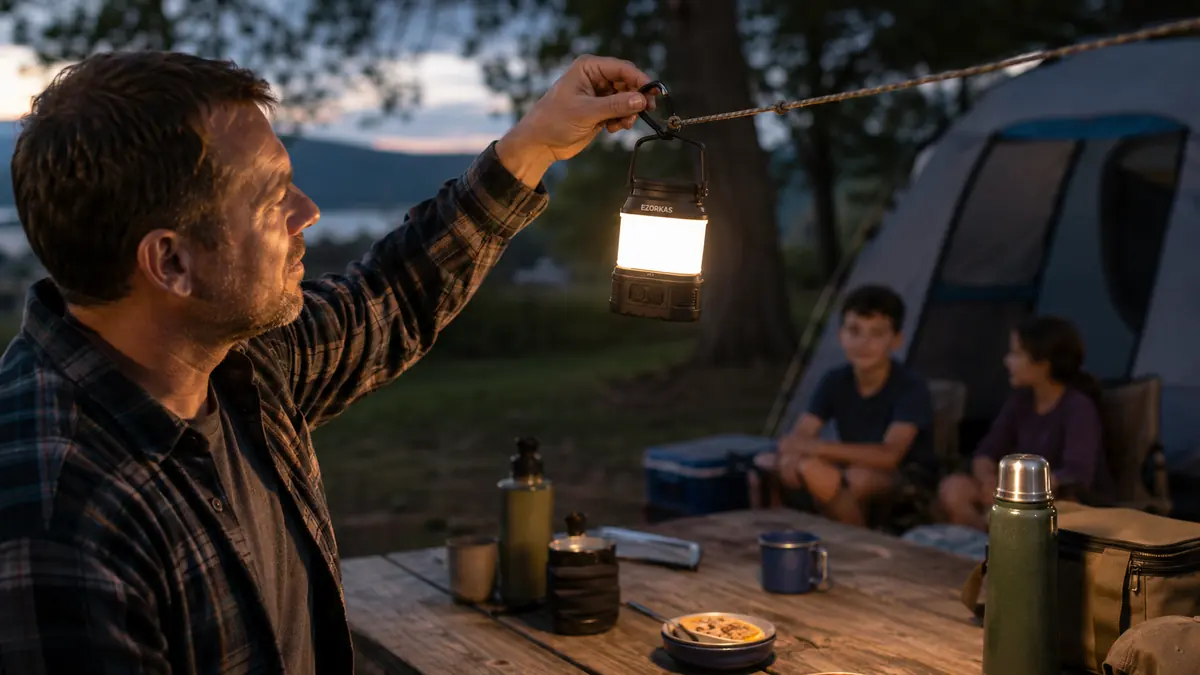
Before we do anything else at a new site, I string a short piece of paracord between two low branches or between the awning bar and a tent pole, whatever the site gives me. The EZORKAS lantern has a fold-out wire handle built for exactly this, so it hooks on and hangs steady instead of swinging every time Ivy bumps the table getting up. I hang it centered over the picnic table, about a foot and a half above head height, so it lights the food prep, the plates, and Dana's cutting board without anybody casting a shadow over their own dinner.
This is the lantern that runs on high the whole evening, from setting up camp chairs through dishes. At full brightness the EZORKAS puts out enough light that Nolan can read the instructions on a s'mores kit without squinting, and it's bright enough that we've stopped needing a second light source at the table entirely. That alone cut our flashlight count in half before dinner even started.
At Turner Falls, where our site was tucked under a stand of cedar with almost no ambient light from the road, this single lantern was doing the job three or four flashlights used to split between them. Dana noticed it first, actually. She said it was the first trip in years where she wasn't holding a flashlight in her teeth while she chopped vegetables.
Step 2: Set the Second Lantern Inside the Tent on Low
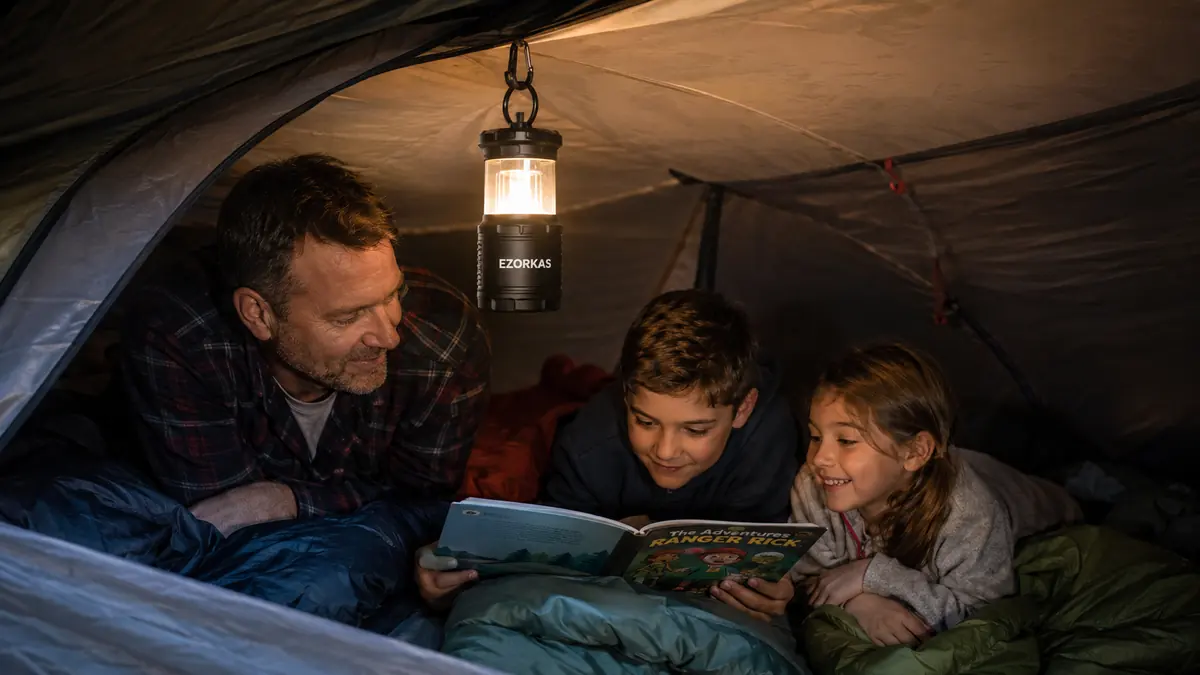
Once the table lantern is up, the second EZORKAS goes inside the tent, clipped to the loop most tents have sewn into the ceiling for exactly this. I switch it to the lowest of its light settings for this job. It's plenty bright for Ivy to find her stuffed rabbit in a sleeping bag or for Nolan to read a few pages before lights out, but it doesn't turn the whole tent into a floodlit box that keeps everyone awake, and it doesn't draw every moth within fifty yards through the mesh.
The magnetic base on the EZORKAS is the part that surprised me here. If a tent doesn't have a hanging loop, the lantern will stick to any metal tent pole clip or even the frame of a cot, which has saved us more than once at sites where the tent loop had already torn out from a previous owner's rough handling. Kids do not care where the light is coming from as long as it's steady and it's there when they wake up at 2am needing the bathroom.
One thing I learned the hard way at Keystone Lake, a lantern on high inside a small tent gets warm enough that it's uncomfortable to touch after twenty minutes, and it lights the whole tent wall bright enough to see from outside, which isn't great for privacy at a busy campground. Low mode solves both problems and still runs long enough to get two kids through bedtime stories and a chapter of whatever book Nolan's working through.
Step 3: Use Flashlight Mode for the Path to the Bathroom or Fire Ring
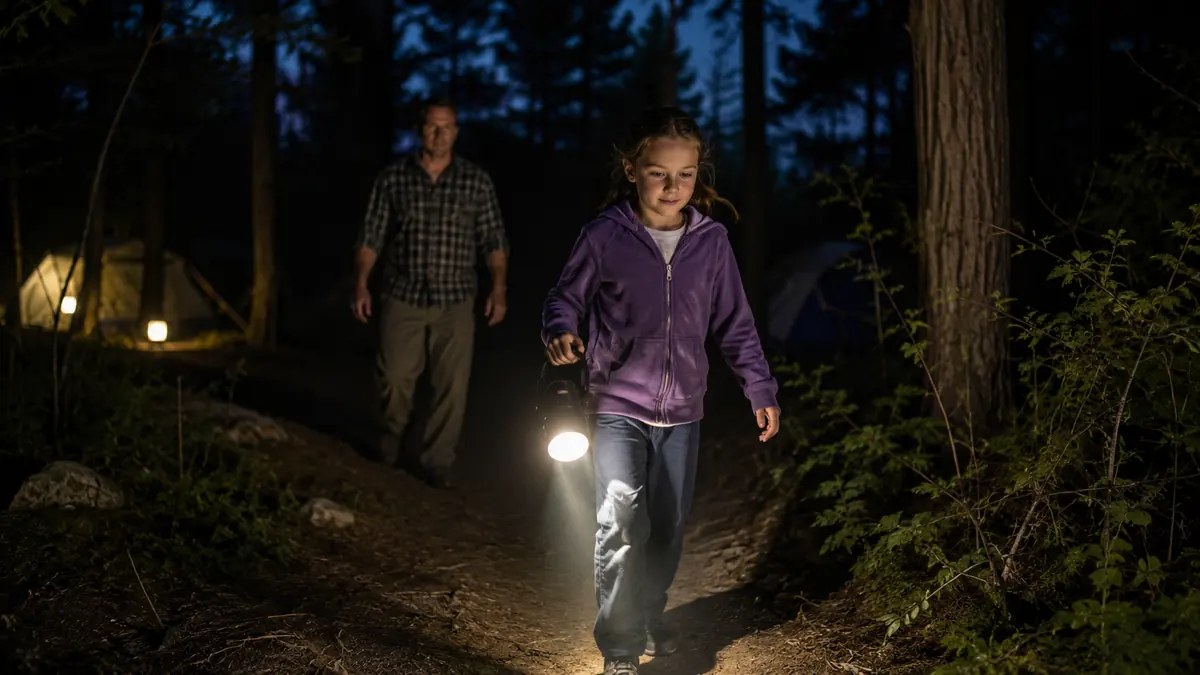
This is the step that actually ended the flashlight scavenger hunt for us. Instead of keeping a separate flashlight by the tent door, whoever needs to walk to the vault toilet or over to the fire ring grabs the tent lantern and twists it into flashlight mode, which narrows the EZORKAS beam into a forward-facing spot instead of the all-around glow it uses for camp light. One lantern, two jobs, and nobody's hunting through a duffel bag for a AA flashlight that might or might not have batteries left in it.
At Robbers Cave the path from our site down to the bathhouse had exposed roots the whole way, and at Lake Tenkiller the walk to the water spigot crossed a stretch with zero ambient light once the moon dipped behind the trees. A dedicated flashlight beam matters more than the wide lantern glow in both of those spots, and having it built into the same unit we were already using meant we never left camp without a light in hand.
It also means an adult is always the one deciding who takes the light, since it's the same lantern that's already clipped inside the tent. Ivy doesn't get to wander off to the bathroom without one of us knowing, because she has to come find whoever's holding the lantern first. That's a small thing, but at a full campground with other families and unfamiliar dogs around, it matters more than it sounds like it should.
Step 4: Charge Both Lanterns the Night Before You Leave, Not the Morning Of
This sounds obvious until you're the guy loading the 4Runner at 6am on a Saturday realizing the lanterns have been sitting dead in the garage since the last trip. I plug both EZORKAS lanterns into a USB charger two nights before we leave, which gives them a full charge and a buffer day in case I forget. A full charge has run us through two to three nights of the table-plus-tent setup on a normal trip, longer if I keep them mostly on low.
The nice part of the 2-in-1 design is that if I do forget to charge them, both lanterns also run on regular batteries as a backup, so a dead rechargeable battery isn't a trip-ending problem, just an annoying one. I keep a spare set of D batteries in the truck's console for exactly that scenario. It's happened once, at Osage Hills, and we didn't lose a single evening over it.
I've also started tossing a small USB power bank in the cooler bag, the kind meant for charging a phone, since it charges the lanterns just fine on a longer weekend at Beavers Bend where we're not driving back and forth to a car charger. It's a five dollar backup for a lighting system the whole trip leans on.
Step 5: Give One Kid 'Lantern Duty' Each Night
This last step has nothing to do with the gear and everything to do with keeping the peace. Nolan and Ivy used to fight over who got to hold the light at any given moment, which is a big part of how we ended up with five flashlights scattered around a campsite in the first place. Now one of them is on lantern duty each night, which means they're the one who hangs the picnic table lantern at setup, switches it to flashlight mode for the bathroom walk, and clips the tent lantern to the loop before bed. They alternate nights, and the arguing over who has 'the light' mostly disappeared.
The EZORKAS magnetic base helps here too. Ivy likes sticking it to the cooler lid or the truck's tailgate when she's not actively carrying it, which keeps it off the ground and away from being stepped on, something that happened to an actual flashlight of ours at Turner Falls two summers ago. Nolan prefers hanging his from the paracord line by the picnic table, more of a set-it-and-forget-it approach, which honestly fits his personality.
What Else Helps
A headlamp is still worth packing for anyone doing hands-on work after dark, like refilling a propane bottle or untangling tent stakes, since a lantern beam pointed at your own hands casts a shadow right where you need to see. We keep one headlamp for whoever's cooking or working the stove, and let the two lanterns handle everything else.
If you're pitching two tents instead of one, or camping with a bigger group, a third small lantern or a battery lantern as backup covers the gap without going back to a flashlight-per-person system. The same principle holds regardless of group size: fewer light sources, each with a clear job, beats a bag of flashlights everyone digs through at the same time.
The night we stopped needing five flashlights was the night camping with two kids actually started to feel relaxing.
None of this is complicated, and that's the point. Two lanterns, three jobs between them, and a kid assigned to keep track of it. It took us longer to figure out than it should have, mostly because we kept buying more flashlights instead of rethinking the setup. If your campsite after dark feels more like a search party than a place to relax, this is the cheapest fix I've found in years of hauling gear out to Robbers Cave, Beavers Bend, and everywhere in between.
Ready to Stop Losing Flashlights at Every Campsite?
One two-pack of EZORKAS lanterns handles the picnic table, the tent, and the bathroom path, which is the whole reason this five-step setup only needs two lights instead of five.
Amazon Check Today's Price on Amazon →