
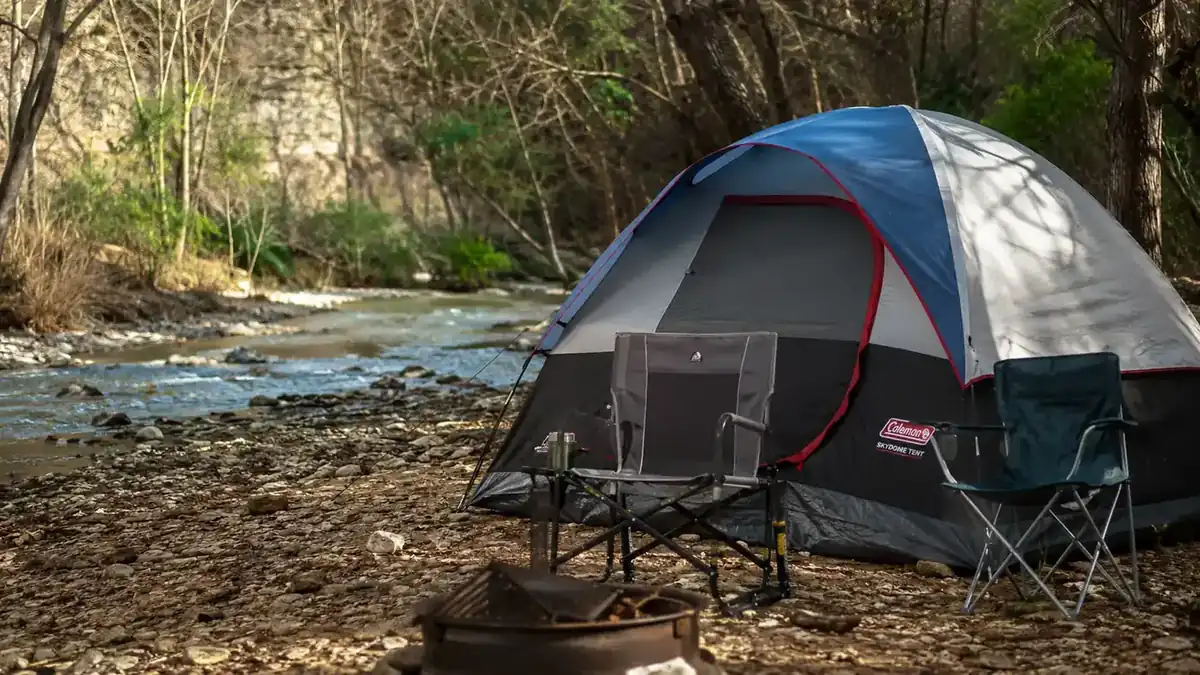
I want to start with the thing nobody selling you a tent will say first. The Coleman Skydome is a good tent, not a great one, and after two full seasons of hauling it out of the back of our 4Runner for trips to Turner Falls, a couple of return visits to Robbers Cave, and enough backyard shakedown nights to lose count, I think that distinction matters more than any five-star sales pitch you'll read on a product page.
My first season with this Coleman tent, I was still in the honeymoon phase. Everything held up, the rain stayed out, and I was ready to hand it a gold star. This review is the second-season version, written after the stakes bent on a rocky site, after I actually paid attention to what the marketing copy claims versus what my family of four experienced, and after I spent my own money fixing the one thing Coleman didn't get quite right. Dana, Nolan (11), and Ivy (8) have all slept in this tent more nights than I can count at this point, so this isn't a first-impressions writeup. It's the honest one.
The Verdict, No Padding
The Quick Verdict
Solid value for a car camping family, but the marketing oversells a couple of features and the stock stakes are the weakest part of the whole package.
Amazon Check Today's Price →Still worth it, once you know what to expect
Two seasons in, I'd still buy the Coleman Skydome again, just with different stakes in the bag. See today's price on Amazon before you decide.
Amazon Check Today's Price on Amazon →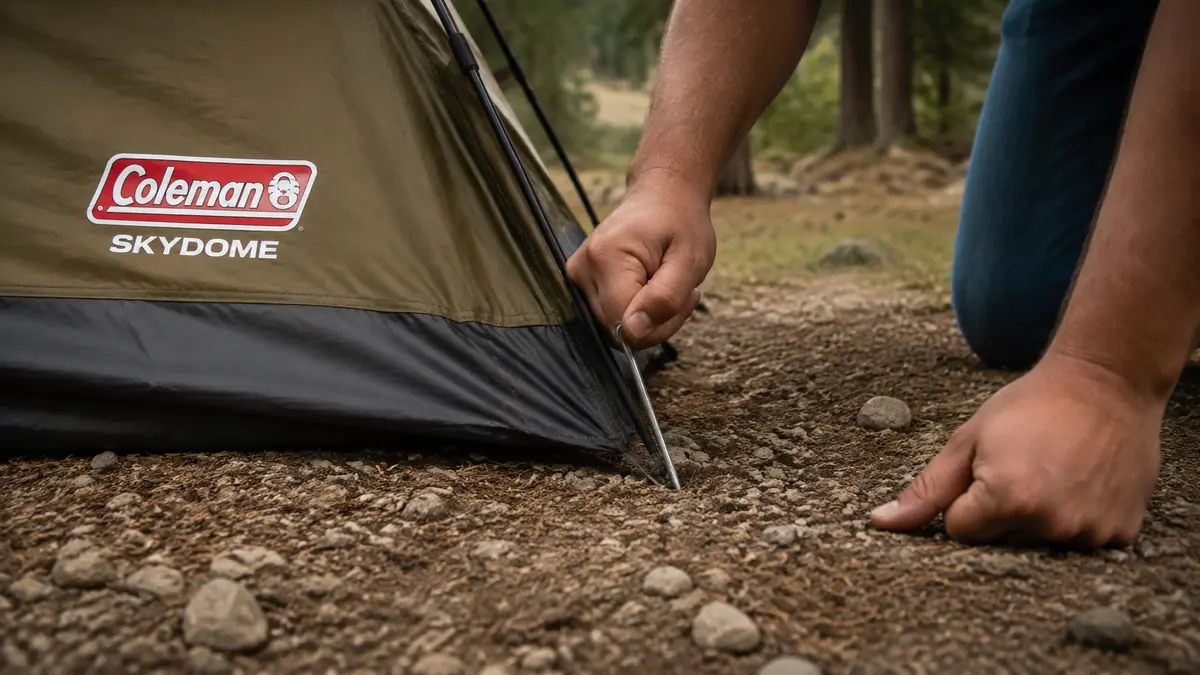
How I Actually Judge Gear Like This
I'm not a gear reviewer by trade. I'm a guy who camps most weekends the weather allows, usually somewhere within four hours of northeast Oklahoma, and who gets annoyed when a product's listing photos don't match what shows up in real conditions. So my standard for a tent isn't a wind tunnel or a controlled rain chamber. It's whether Dana and I can get it up before the kids get cranky, whether it survives whatever ground we happen to be pitching it on, and whether I'd tell a friend to buy the exact one we own or push them toward something else.
The Turner Falls trip is the one that changed my opinion the most. That campground has a lot of hard-packed, rocky ground close to the creek, nothing like the soft dirt we usually stake into at Lake Tenkiller. It's also the trip where I started paying closer attention to which parts of this Coleman tent were genuinely well built and which parts were just fine for a demo pitch in someone's backyard.
I also went back through my own notes from season one, the ones I wrote when everything felt new and impressive, and compared them against how I actually feel using this tent now, on autopilot, without the novelty. That gap between first impression and routine use is where the honest review lives, and it's what most write-ups skip. I also asked Dana for her own separate take before I wrote any of this, since she handles the fly and the poles as much as I do, and her complaints ended up matching mine almost exactly, which told me I wasn't just being picky.
The Claim That Actually Held Up
Coleman advertises a five-minute setup, and I'll give credit where it's due. It's not five minutes the first time, not even close, but once you've pitched this tent four or five times, you genuinely can get it from bag to standing structure in well under ten minutes with two people working the poles and stakes together. I timed it more than once out of curiosity. Solo, I land closer to nine or ten minutes including stakes and guy lines. With Nolan holding a corner and Dana clipping the fly, we've hit six.
That's the rare case where a marketing number is technically defensible if you squint, which is more than I can say for most tents in this price range. The hub-and-pole system genuinely does most of the work. You're not threading anything through a fabric sleeve blind, which is where most of the wasted time on our old tent went. Coleman gets full marks here, and it's the reason I still reach for this one first, even on nights when we're setting up in the dark after a long drive.
What's Overrated
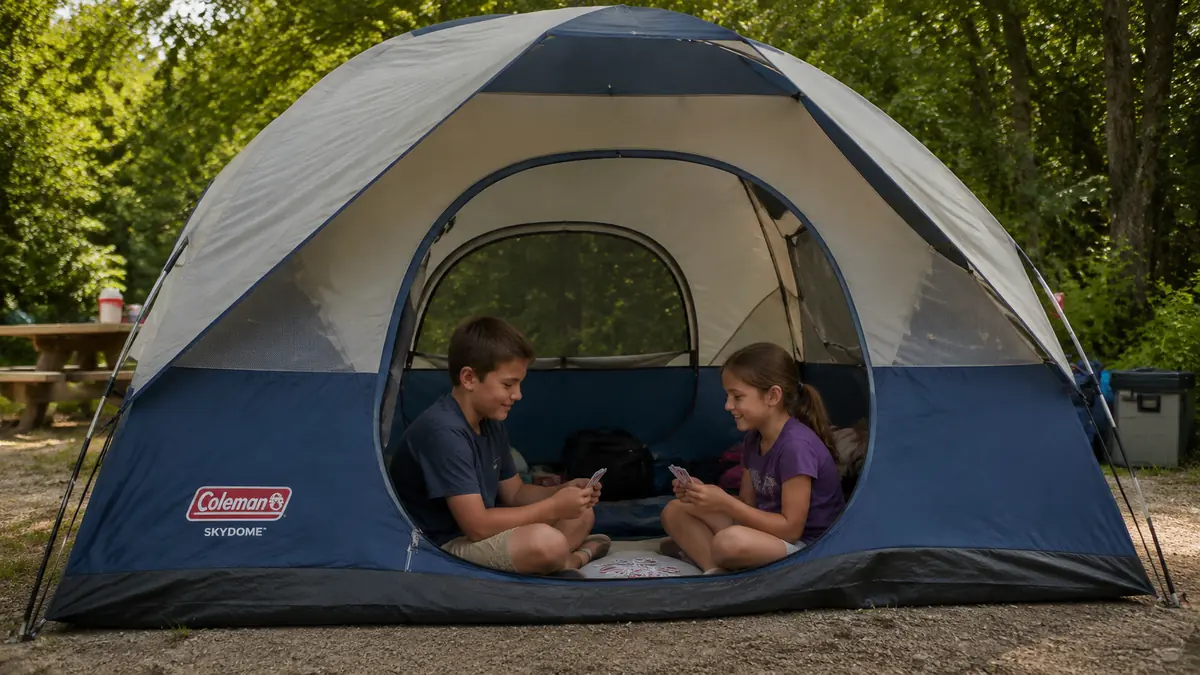
The headroom claim is where I start pushing back. Coleman markets this as having 20% more headroom than a traditional dome, and sure, on paper and against their own older lineup that's probably true. But standing inside it with Dana getting Ivy changed into pajamas at the same time I'm digging through a duffel for a headlamp, it still feels like a tent, not a room. I'm 5'11 and I can stand mostly upright dead center, for maybe a three-foot radius, and that's it. If the listing photos make it look roomier than that, it's because a wide-angle lens makes every tent look roomier than that.
The tub floor gets talked up a lot too, and it does keep water out during a real storm, I'll say that much. But I've seen some reviews online treat it like some kind of flood-proof bathtub, and that's not the reality. It's a few inches of upturned waterproof material at the seam, which is enough to stop ground water from wicking in during normal rain. It is not enough to save you if you pitch this Coleman tent in a low spot that actually pools during a downpour. Site selection still matters more than the tub floor does, and no marketing copy is going to tell you that.
The WeatherTec name is another one I'd file under overrated, at least as a standalone selling point. It sounds like a proprietary fabric or a special coating, and when I first bought the tent I assumed it meant something more advanced than it does. In practice it's just Coleman's branding for a combination of things that are individually pretty ordinary, the tub floor, sealed seams, and welded corners working together. Those pieces do their job fine, but calling it a system with its own name makes it sound like more engineering than it actually is.
The One Thing I'd Change
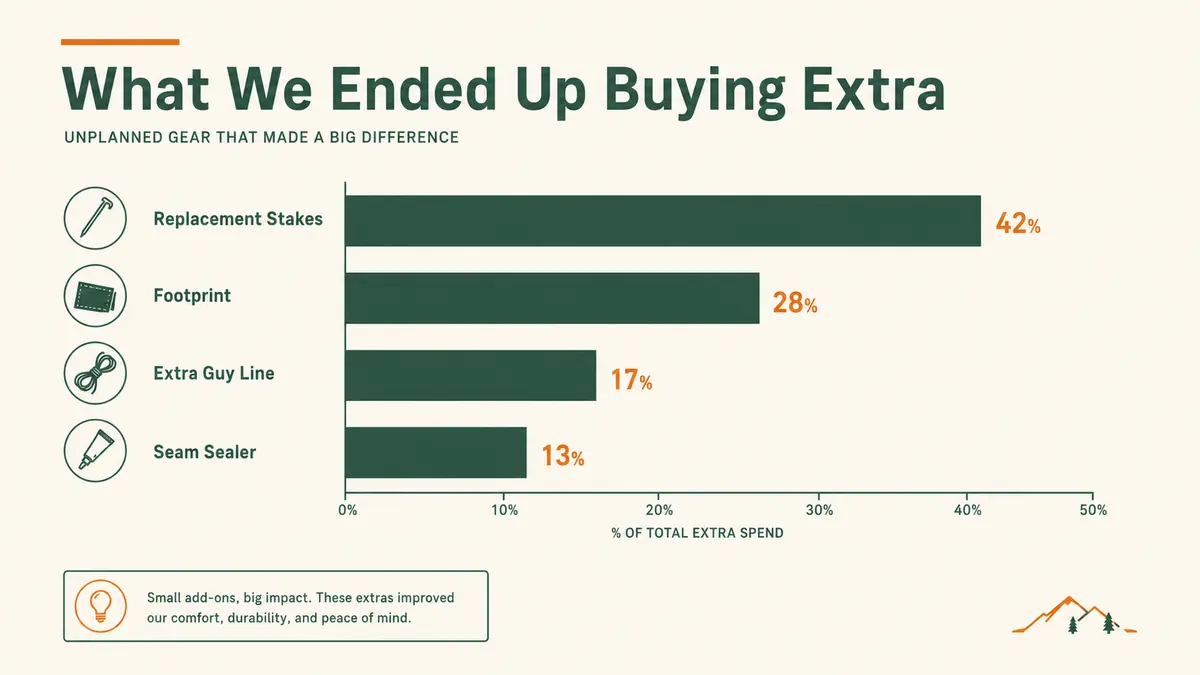
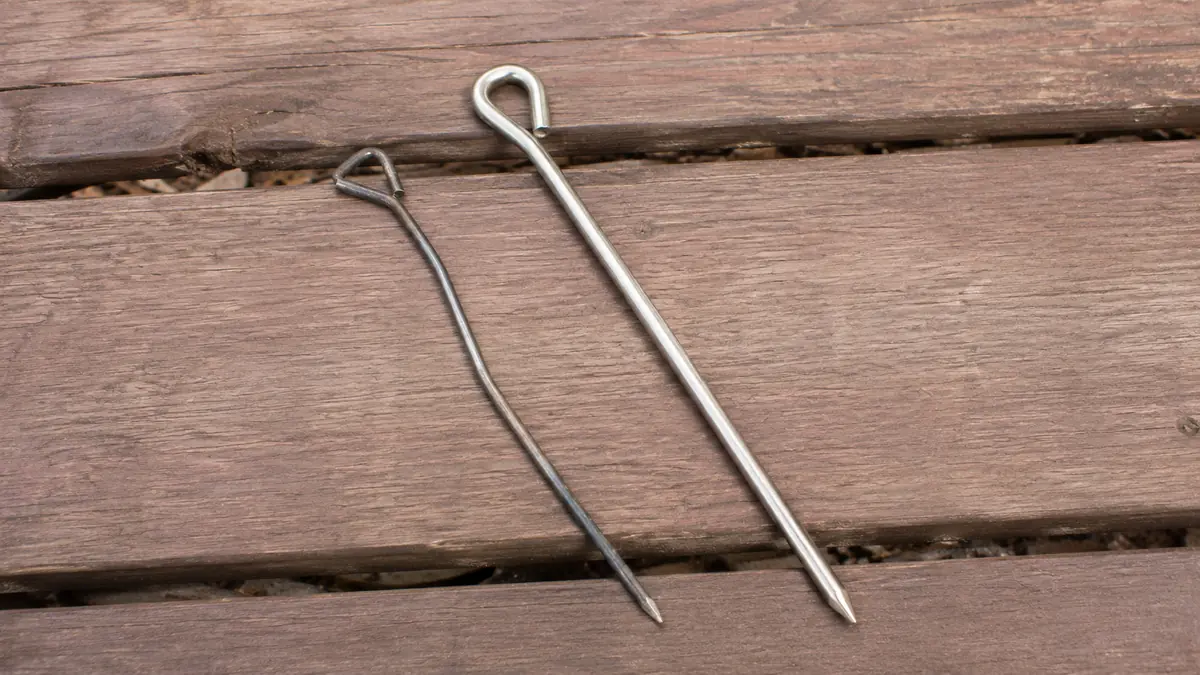
If Coleman let me redesign one part of this tent, it's the stakes. The ones that ship in the bag are thin, lightweight aluminum, fine for soft dirt but genuinely bad news the moment you hit rocky or hard-packed ground. At Turner Falls I bent two of them trying to get enough purchase near the creek bank, and a third one just gave up and folded at an angle that made it useless. I ended up finishing that pitch with a mix of half-driven stock stakes and a couple of tent pegs I keep as backups in the 4Runner's gear tub.
I bought a set of thicker steel stakes after that trip, and it's a small, cheap fix, but it should not be a fix the buyer has to make. For a tent that's otherwise built with real attention to the parts that matter, water resistance, pole strength, seam construction, shipping it with stakes that can't handle a common Oklahoma campsite feels like a corner Coleman cut somewhere in production to hit a price point. If you buy this tent, budget for better stakes on day one instead of learning the hard way like I did.
It's a small complaint in the grand scheme of a tent that otherwise does what it's supposed to do, but it's the kind of small complaint that turns into a genuinely bad night if it catches you by surprise on unfamiliar ground. I'd rather flag it here than have another camping family find out at 9 PM with a storm rolling in.
Durability After Two Seasons
Beyond the stakes, the rest of the build has genuinely earned my trust. The main zippers on the door and windows still glide smoothly with no snags, even with Nolan treating the door flap like a revolving door most weekends. The mesh panels, which I expected to be the first thing to tear given how often the kids brush past them getting in and out, are still intact without so much as a pinhole. The pole hub, the plastic piece where all four poles connect at the peak, hasn't cracked or developed any play in the joints despite going up and down more times than I bothered counting.
The rainfly has faded a shade under two seasons of Oklahoma sun, which is normal for any polyester fabric that spends that much time outdoors, but it hasn't gotten brittle or started losing its water repellency that I can tell. The reflective cord on the guy lines is still bright enough to catch a headlamp beam at night, which matters more than it sounds like when you're trying to avoid tripping a kid over a line in the dark on the way to the bathroom.
The interior storage pockets and the small gear loft at the ceiling have held up fine too, though I'll admit we don't use the gear loft much since it's mostly Ivy's stuffed animals up there instead of anything functional. Small thing, but the stitching on those pockets hasn't pulled loose even with kids constantly stuffing socks and flashlights into them and yanking them back out.
The Footprint Question
Coleman sells a matching footprint for this tent as a separate accessory, and I get asked about it more than almost anything else. We didn't buy one for the first season and didn't notice a problem, but after the Turner Falls trip I picked one up mostly to protect the floor from the same rocky ground that wrecked our stakes. It's a reasonable extra if you regularly camp on rough terrain, but for soft-ground campgrounds like Beavers Bend or most of Lake Tenkiller, I don't think it's necessary. The tub floor alone has handled normal dirt and gravel fine without it.
If I'm being fully honest, the footprint is one more example of a small gap between what this Coleman tent needs out of the box and what it actually ships with. It's not a dealbreaker, since a footprint is cheap and easy to add, but between that and the stakes, don't go into this purchase assuming the tent in the box is the complete kit for every kind of ground you'll camp on.
Where the Price Actually Makes Sense
I looked at a few pricier freestanding tents before we bought this one, the kind marketed more toward serious backpackers who happen to also car camp sometimes. Better stakes standard, sturdier poles, but honestly more tent than a family doing weekend trips to state parks needs, and priced accordingly. I also looked at a couple of cheaper off-brand domes, and the rain performance reviews on those were inconsistent enough that I wasn't willing to gamble a family trip on them.
Where the Coleman Skydome lands, once you factor in a set of better stakes and maybe a footprint, is still a fair deal for what you get. It's not the cheapest option on the shelf and it's not pretending to be premium gear either. It sits in that middle lane where most car camping families actually shop, and once you fix the one weak point yourself, the rest of the build earns its keep trip after trip.
Two seasons of regular use is long enough for me to say this with confidence instead of a hunch. If this tent were going to fall apart on us, I'd expect to have seen it by now, on the zippers, the seams, or the pole hub, and I haven't. The stakes were the surprise, and once that surprise is fixed with a cheap upgrade, the value math on this Coleman tent works out in the buyer's favor.
What I Liked
- The five-minute setup claim is roughly honest once you've pitched it a few times
- Rainfly and tub floor genuinely kept us dry through real storms, not just a hose test
- Pole hub, zippers, and mesh panels show zero wear after two full seasons of regular use
- Fair price for a car camping family, especially once you swap the stakes
- Packs down small enough to still leave room for the cooler in the 4Runner
Where It Falls Short
- Stock stakes are thin and bend easily on rocky or hard-packed ground
- Headroom is better than older dome tents but not as roomy as the marketing photos suggest
- Tub floor helps but won't save you from a bad site pick in heavy rain
- Separate footprint isn't included, which matters more on rough terrain
- Condensation builds up fast if you forget to crack the ground vents
The stakes are the one thing I'd change, and it's a cheap fix Coleman should have handled before it ever left the factory.
Who This Is For
This tent makes the most sense for a family doing exactly what we do, weekend car camping trips inside a few hours of home, pulling into a campsite with an SUV full of gear rather than carrying anything on your back. If you're willing to spend a little extra on better stakes and remember to crack the vents, the Coleman Skydome is a genuinely solid, honestly priced tent that we've kept using trip after trip without hesitation.
It's also a good fit if you're replacing an old, worn-out dome tent and want something faster to pitch without spending premium money. Two seasons in, the parts that matter most, the poles, the zippers, the rainfly seams, have all held up exactly the way I'd want them to for a tent in this price range.
Who Should Skip It
If you camp regularly on rocky, hard-packed, or otherwise difficult ground and you're not willing to swap the stakes right away, you're going to have a frustrating first trip like I did. Skip it too if you're chasing backpacking-grade headroom or airflow, because this Coleman tent is built for trucks and SUVs, not for someone trying to shave ounces off a pack list. And if you can't stand the idea of a product that needs one small aftermarket fix to reach its full potential, this isn't the tent that's going to give you a flawless out-of-the-box experience.
The honest version, still a yes from us
Bend a couple of stakes, learn the lesson, and this Coleman tent earns its spot in the gear closet. See today's price on Amazon and grab better stakes while you're at it.
Amazon Check Today's Price on Amazon →