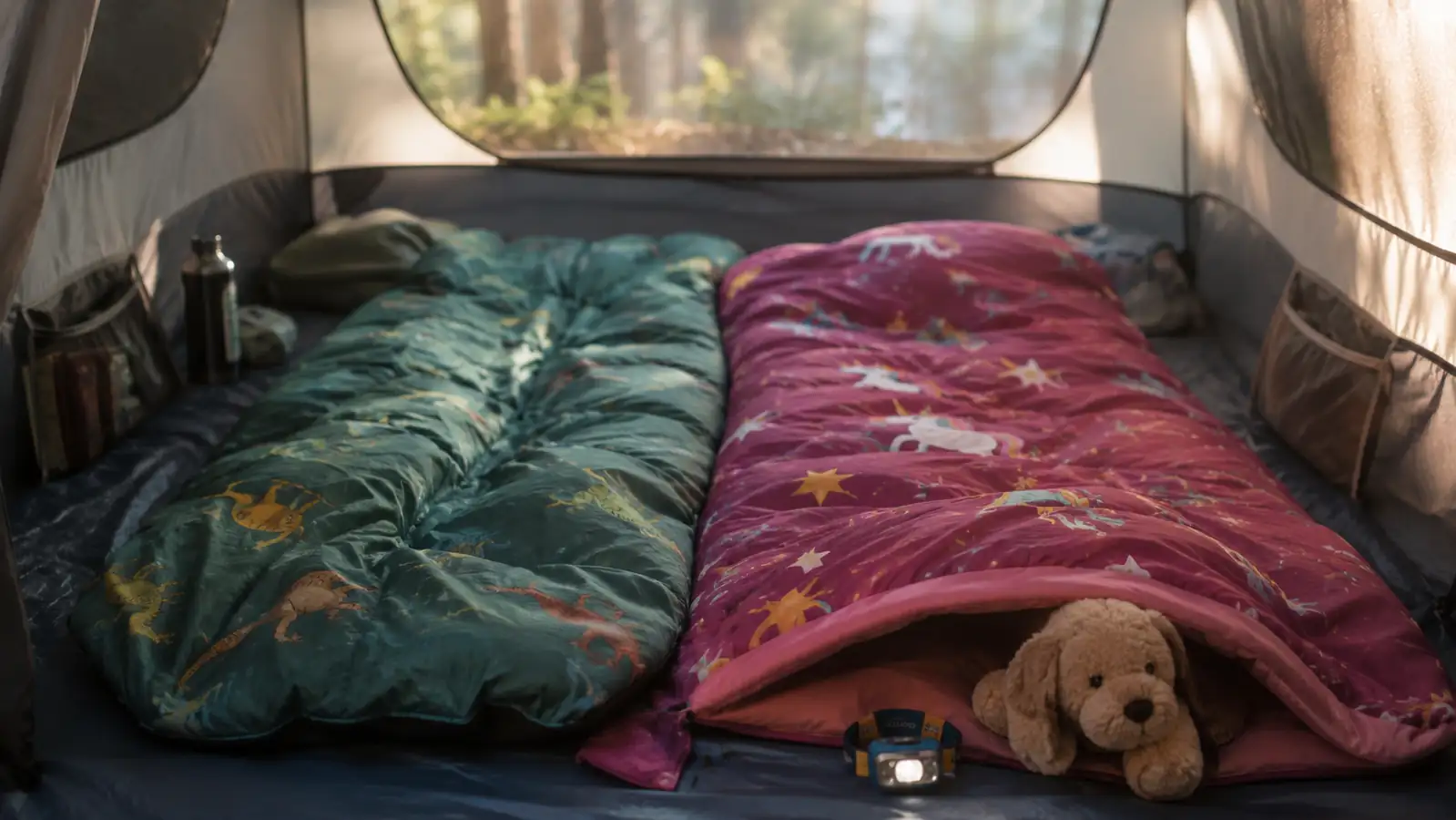
My son Nolan zipped himself into his new sleeping bag at Beavers Bend back in March, poked his head out the top, and asked why it smelled like a new car. That's about as much scrutiny as an 11-year-old gives new gear, but it stuck with me, because six months and six trips later that same bag still doesn't smell like mildew, the zipper still runs smooth top to bottom, and it hasn't lost any of its loft that I can tell just by squeezing it. We bought two of the oaskys sleeping bags that week, one for Nolan and one for my daughter Ivy, mostly because the price let us try two without thinking too hard about it, and I wanted to see if a budget 3-season bag could actually survive a season of real use with kids who treat gear like it owes them money.
This isn't a lab test. I don't have a temperature chamber in my garage. What I have is six trips within about four hours of our home in northeast Oklahoma, a 2016 4Runner that hauls all our gear, and two kids who slept in these bags at Beavers Bend, Robbers Cave, Lake Tenkiller, and a couple of quick overnighters closer to home. The oaskys bag isn't trying to be a technical mountaineering piece and it doesn't pretend to be. It's a car camping bag, and that's exactly how we used it.
Quick Verdict
The Quick Verdict
A genuinely comfortable, honestly warm-enough 3-season bag for the price, with the caveat that the true low end of its rating is optimistic and the included compression sack is the weak point.
Amazon Check Today's Price →The bag that's stayed in rotation for six straight trips
After a spring, a summer, and the start of fall camping with two kids, the oaskys sleeping bag is the one still getting packed every weekend. Check today's price on Amazon.
Amazon Check Today's Price on Amazon →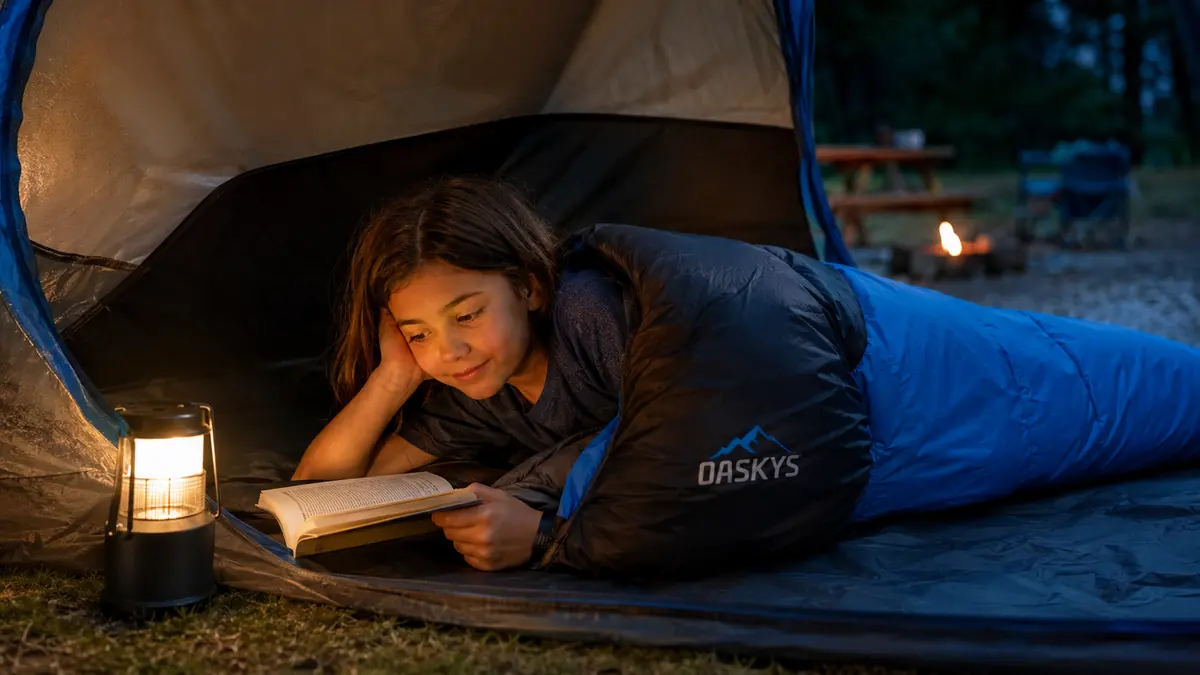
How We've Used It
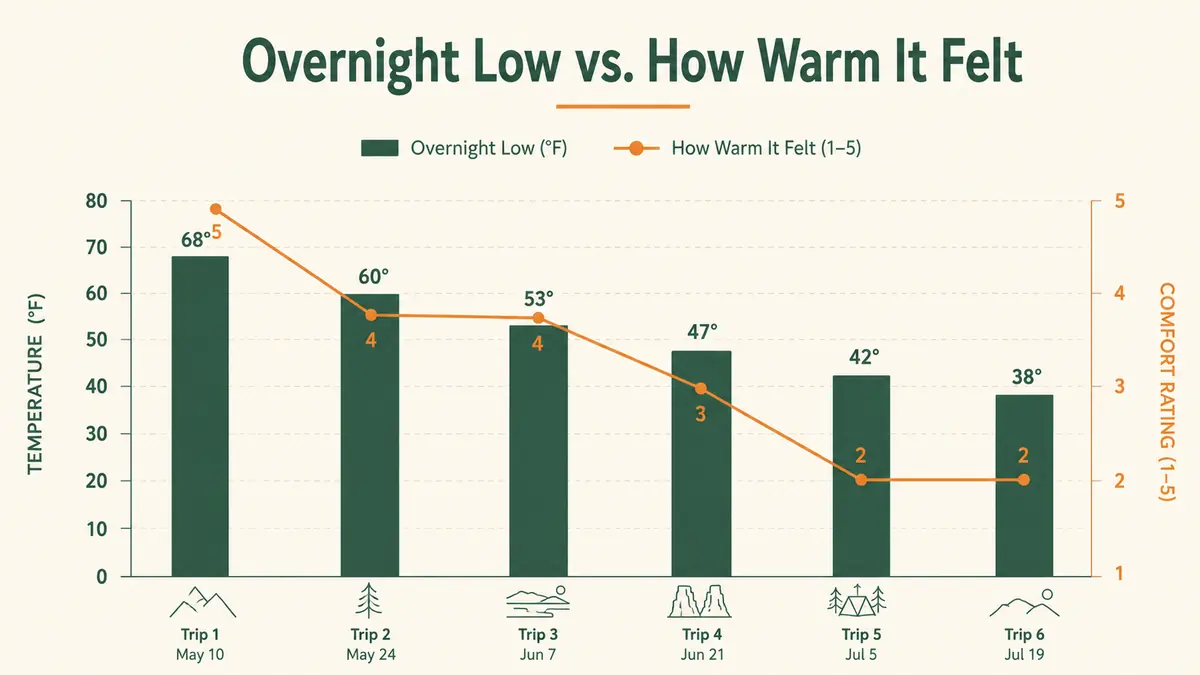
We picked up the oaskys bags in early March, right before a Beavers Bend trip where the overnight low was forecast at 46 degrees. That first night was really the test I cared most about, because a sleeping bag that only performs in ideal 60-degree conditions isn't worth much to a family that camps whenever the calendar allows, not just on the mild weekends. From there we took the bags to Robbers Cave in April, a hot, sticky June weekend at Lake Tenkiller where the overnight low barely dropped below 68, and then two more trips through late summer and into a cooler September night that got down to 38 degrees, the coldest test the bags have seen so far.
That range matters because it's exactly what a 3-season bag is supposed to cover. We're not sleeping in these things in January, and oaskys doesn't claim you should. What I wanted to know is whether one bag could reasonably handle a 68-degree June night without cooking the kids alive and a 38-degree September night without them waking up cold and cranky at 2 AM. Six trips in, the answer is mostly yes, with one honest caveat I'll get to below.
Ivy, who's eight and runs cold compared to Nolan, has needed a light fleece layer underneath on the coldest nights we've had so far. Nolan, who's eleven and sleeps hot no matter what, has unzipped the oaskys bag halfway down on every warm-weather trip and used it more like a quilt than a mummy bag. Both approaches have worked fine, which tells me the shape and zipper design are flexible enough to handle two very different kids without either one being miserable.
By the third trip, packing for a weekend had become routine enough that Dana handles the kids' sleeping gear while I load the tent and cooler, and neither of us thinks twice about it anymore. That's a small thing, but it's the kind of small thing that tells you a piece of gear has earned its place. A bag we had to babysit, checking zippers or worrying about a torn seam every trip, wouldn't have earned that kind of trust this fast.
Warmth Rating vs. What It Actually Felt Like
oaskys markets this as a 3-season bag good roughly from summer through fall, and after six trips I'd put the honest comfortable floor closer to 45 degrees for a kid who runs a little cold, not the lower end some listings imply. At 46 degrees at Beavers Bend, both kids slept through the night without complaint in just the bag and their normal pajamas. At 38 degrees in September, Ivy needed that extra fleece layer and a beanie, while Nolan, sleeping hot as always, was fine with just a pair of socks added to his usual setup.
That's not a knock specific to oaskys. Almost every budget 3-season bag I've read about runs a little optimistic on its stated rating, and this one is honest enough that I'd rather flag it clearly than pretend it sleeps warm down into the 30s comfortably for every kid. If you're planning trips where overnight lows regularly dip under 40, plan on a liner or an extra base layer with this bag, the same way you would with almost anything in this price range.
On the warm end, the June night at Lake Tenkiller with a 68-degree low was the real surprise. I expected both kids to kick the oaskys bags off entirely, and Nolan mostly did, but Ivy actually stayed zipped in most of the night with just the top few inches open near her shoulders. The shell fabric breathes better than I expected for something at this price, and neither kid woke up sweaty or complaining, which has happened with cheaper bags we've owned in the past.
Build Quality After Six Trips
The zipper is the part I watch closest on any kid's sleeping bag, because it's usually the first thing to fail. Both oaskys zippers have run smooth through six trips with zero snagging, even with Nolan yanking his up and down half a dozen times a night out of pure restlessness. There's a small fabric guard sewn in along the zipper track specifically to keep it from catching the lining, and it's actually done its job every single time I've checked, which is more than I can say for a couple of bags we've retired over the years.
The stitching at the foot box and along the main seams still looks clean with no fraying or loose threads that I can find, and the shell fabric hasn't picked up any visible wear despite both kids dragging their bags across gravel campsite pads more than once while helping unload the 4Runner. The water-resistant coating on the outer shell got a real test at Robbers Cave when a light morning drizzle hit the tent before we'd fully packed up, and the bags that had been sitting half-exposed near the tent door beaded water off rather than soaking through.
The one weak point I've found is the included compression sack. It does the job of getting the bag down to a packable size, but the drawstring cord lock on Ivy's sack cracked slightly after repeated use by trip four. It still functions, just not as smoothly as it did new. Nothing about the bag itself has shown that kind of wear, only the accessory sack, which is a minor complaint but worth flagging since it's the piece you touch most often when loading and unloading the 4Runner.
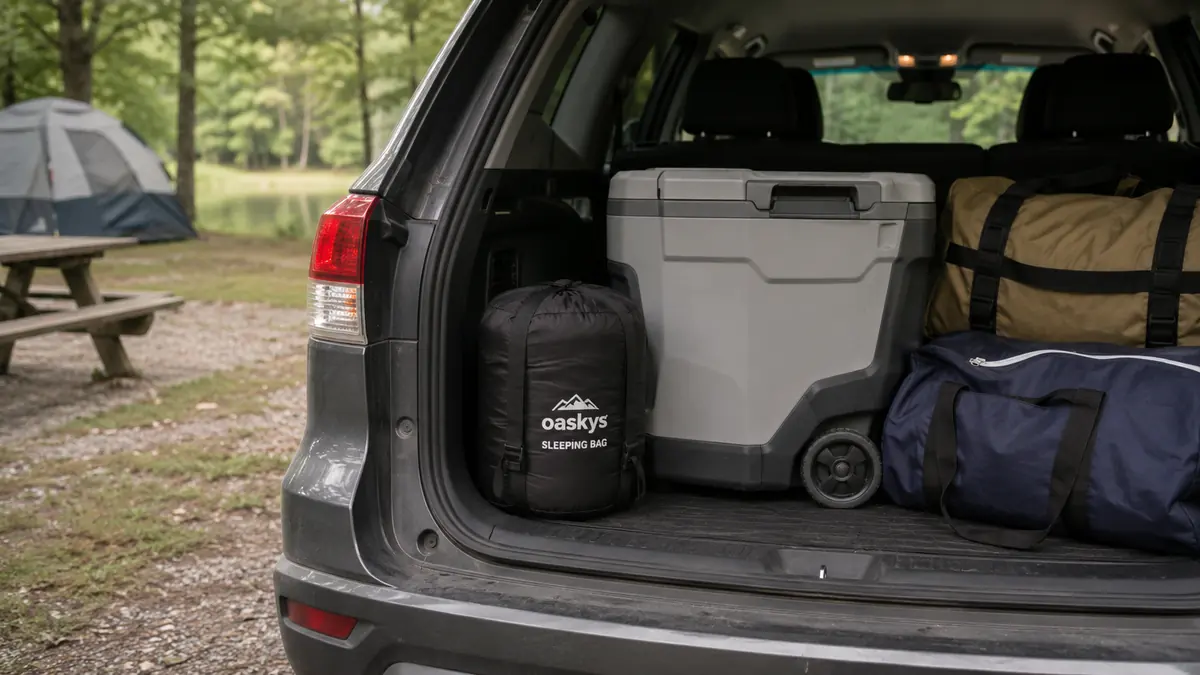
Packed Size and Loading the 4Runner
Compressed in its sack, each oaskys bag is roughly the size of a large loaf of bread, small enough that both kids' bags plus our gear tubs and the rolling cooler still fit comfortably in the back of the 2016 4Runner without anyone riding with a bag on their lap. That's not a small thing when you're loading for a weekend trip with two kids' worth of everything else, tents, camp chairs, a stove, food for two days. A bulky sleeping bag eats real cargo space fast, and these don't.
The weight is light enough that Nolan can carry his own bag from the truck to the tent without asking for help, which sounds minor but has genuinely sped up our setup routine at every campsite this season. Ivy still needs a hand getting hers unrolled and clipped shut the first time at a new site, but that's more about an eight-year-old's patience with buckles than anything about the bag itself.
What I Considered Before Buying Two
Before landing on the oaskys bags, I looked at a couple of well-known brand-name options that would have run us two to three times as much per bag for a warmth rating that wasn't meaningfully different from what we needed. For a family that's outfitting two growing kids who'll size up in a few years anyway, spending premium money on a bag Ivy might outgrow by next season felt like the wrong trade. I also considered just handing down an old adult sleeping bag we had in the garage, but the fit was wrong for a kid her size, and a bag that's too roomy doesn't trap body heat the way a properly sized one does.
The other option I ruled out early was a cheaper no-name bag from a big-box store that Dana almost grabbed on a whim before our first spring trip. I've been burned by that kind of purchase before, a zipper that jams by the second trip, a shell that soaks through in a light rain. Reading through enough reviews on the oaskys listing before we bought, the warmth complaints matched what I've now experienced firsthand, which told me the reviews were honest rather than inflated. That consistency is part of why I trusted the purchase enough to buy two at once instead of testing with just one first.
What I Liked
- Zipper has run smooth for six straight trips with no snagging
- Comfortable and breathable enough on warm 68-degree nights
- Compresses small enough to leave room for the cooler in the 4Runner
- Water-resistant shell handled a light morning drizzle without soaking through
- Light enough for an 11-year-old to carry and set up on his own
Where It Falls Short
- True comfortable floor felt closer to 45 degrees, not the lower end some listings suggest
- Included compression sack's cord lock showed wear by the fourth trip
- Kids who run cold will want a base layer or liner below 40 degrees
- Not built for anything colder than a mild fall night
At 46 degrees at Beavers Bend, both kids slept through the night in just the oaskys bag and their pajamas. That's the test that actually told me something.
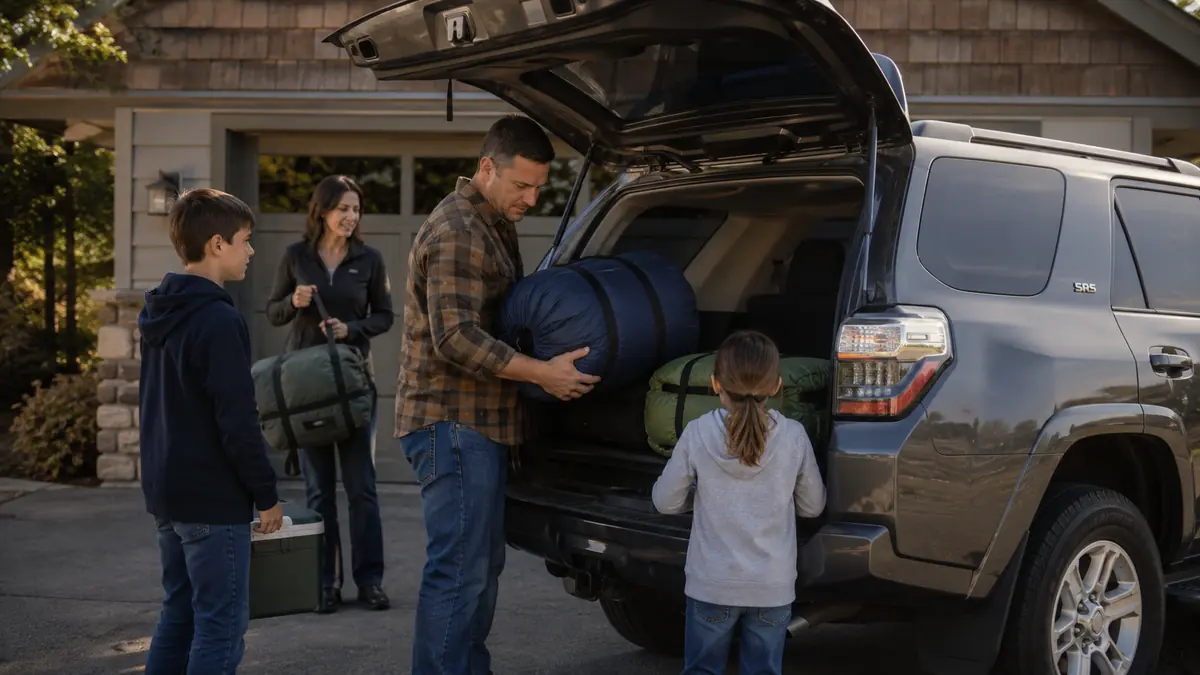
Who This Is For
This bag makes the most sense for a car camping family that's out most weekends within a few hours of home, spring through fall, the same way we camp in northeast Oklahoma. If you're outfitting more than one kid and don't want to spend a fortune doing it, buying two or three oaskys bags instead of one premium bag lets everyone have their own without blowing the gear budget. It's also a solid pick if your current setup is hand-me-down bags or an old cotton sleeping bag, because almost anything purpose-built for camping is going to outperform that.
Who Should Skip It
If you're regularly camping into genuinely cold nights, well under 40 degrees, or you camp in a climate where that's the norm rather than the exception, look at a bag with a lower true comfort rating instead. This isn't a winter bag and oaskys doesn't market it as one. And if you're the type who wants a heavy-duty compression sack that'll survive years of rough handling, plan on swapping that piece out eventually, because it's the one part of this setup that's shown real wear in six months.
Six trips in, still the bag both kids reach for first
If you want a comfortable, honestly warm-enough 3-season bag that doesn't eat your whole gear budget, the oaskys sleeping bag has earned its spot in our gear closet. See today's price on Amazon.
Amazon Check Today's Price on Amazon →