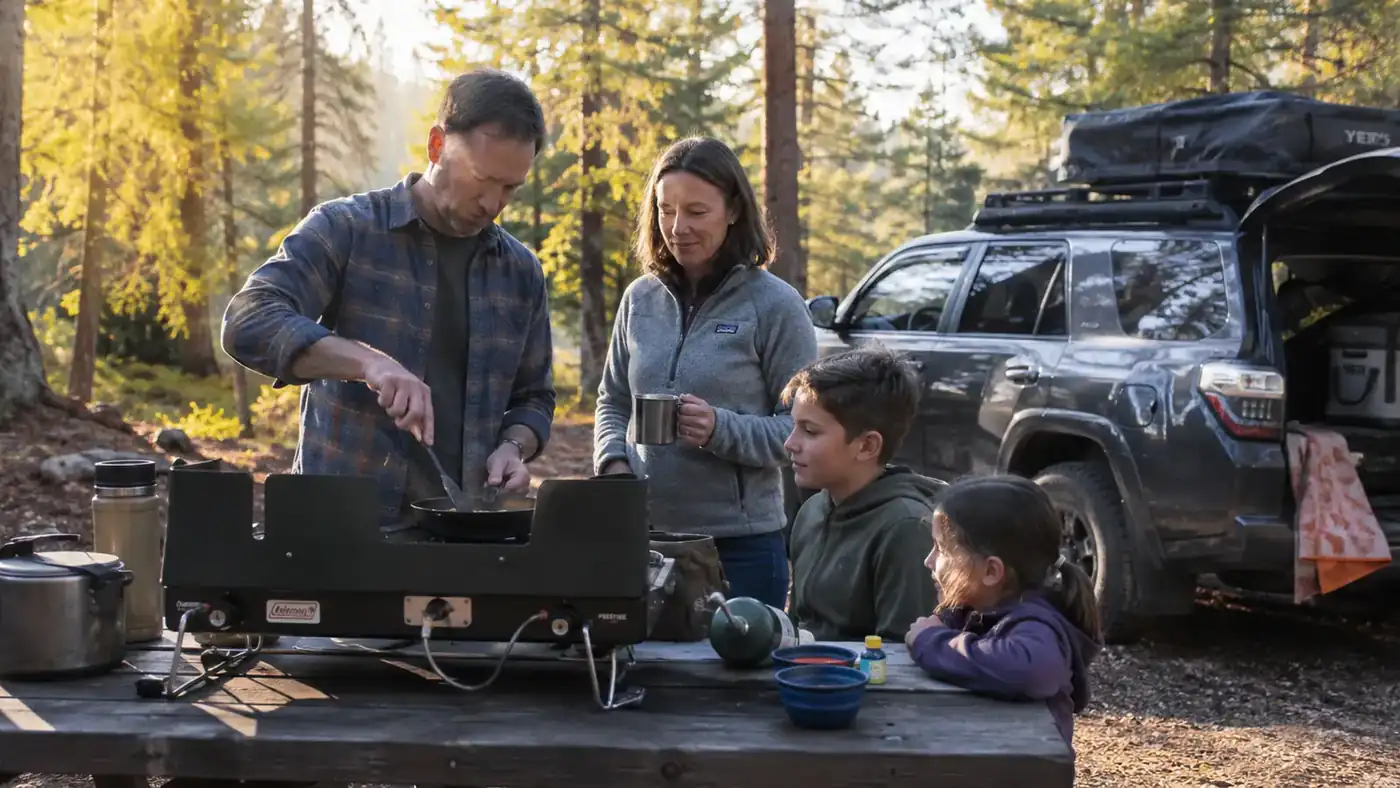
I used to be a fire-only guy. There's something about cooking over actual flame that feels more like camping, and for the first few years we had a fire ring going every single trip. Then Nolan turned about eight and started eating like a grown man, and I realized I was spending forty-five minutes coaxing a fire hot enough to cook eggs while two kids circled the picnic table asking when breakfast was ready. That's when I picked up a Coleman Triton+ 2-Burner stove, mostly because it was on sale at the outfitter in Tahlequah, and it's been in the back of the 4Runner on every trip since.
I'm not saying skip the campfire entirely. We still build one most nights for the kids to roast marshmallows over. But when it comes to actually cooking a meal for four people on a schedule, the Coleman stove wins almost every time, and here's why.
The stove that ended our soggy-firewood breakfasts
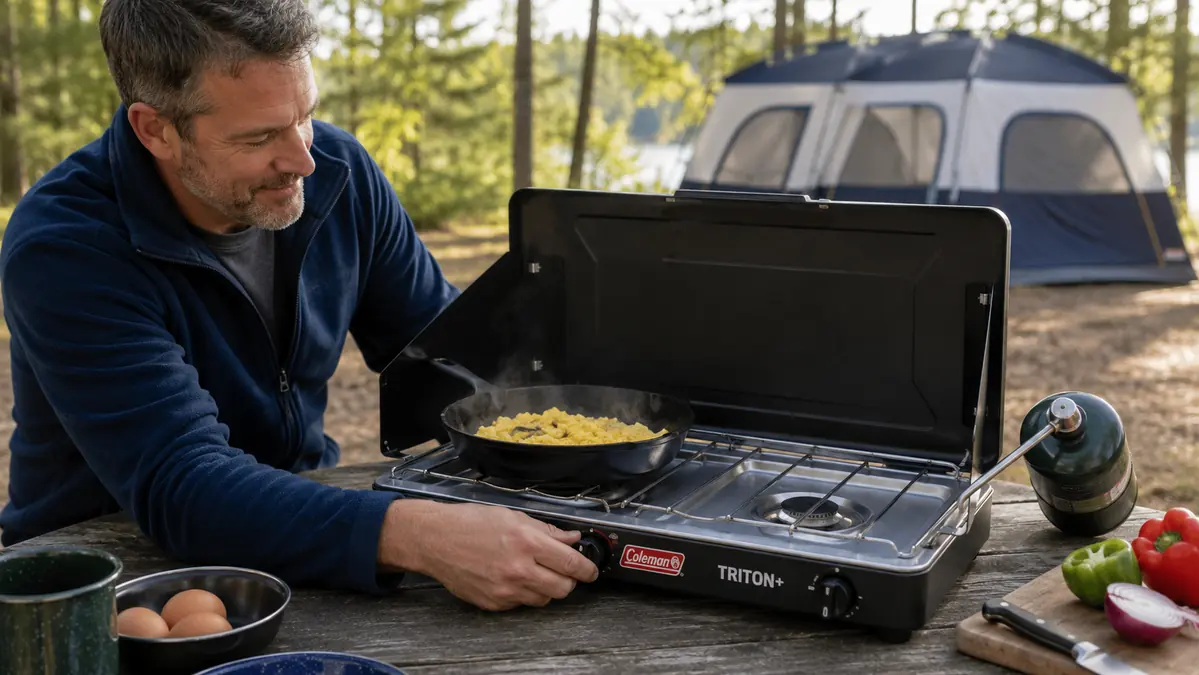
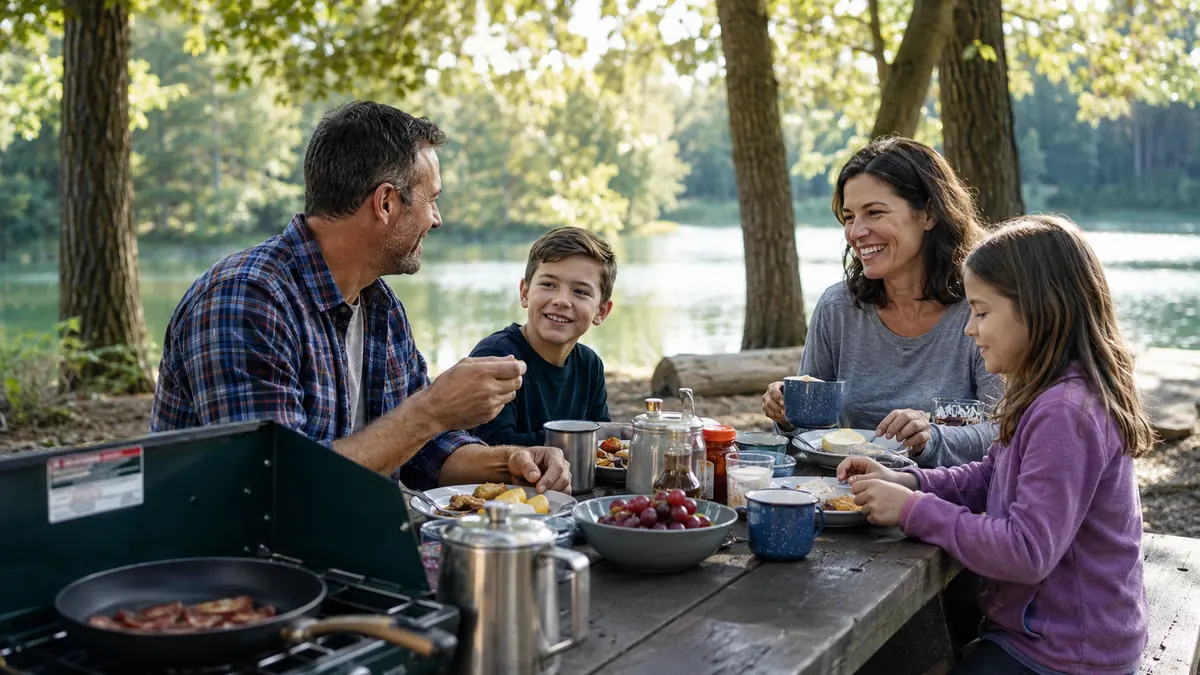
This is the Coleman Triton+ we've used all season. Two adjustable burners, wind guards on both sides, and it lights first try even when everything else at the site is damp.
Amazon Check Today's Price on Amazon →It lights on the first try, even on a damp morning
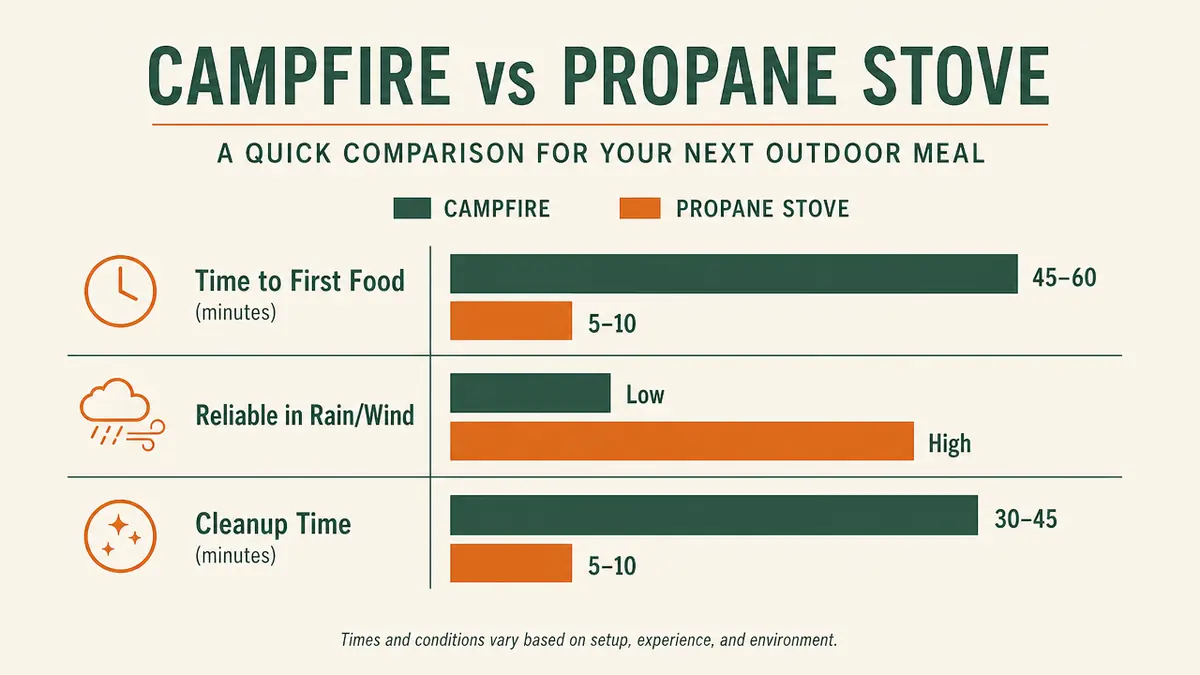
Wet wood is the number one reason a campfire breakfast turns into a campfire lunch. The InstaStart ignition on the Triton+ doesn't care that everything at Osage Hills got rained on overnight. Turn the knob, hear the click, get flame. I've used it maybe sixty mornings now and I can count on one hand the times it didn't light first try, and every one of those was a nearly empty propane bottle, not the stove's fault.
No gathering, splitting, or drying wood before you can eat
Building a cook fire means finding dry wood, which at most Oklahoma state parks means driving to the camp store or hoping the last group left a stack. Then you're splitting kindling with a hatchet while Ivy asks how much longer. With the stove, dinner starts the second the propane bottle is threaded on. That's maybe ninety seconds versus twenty minutes of wood work, and on a short weekend trip that time actually matters.
Two burners means a real meal, not just boiled water
A campfire gives you one heat zone, maybe two if you're good at managing coals, and even then the temperature swings constantly. The Triton+ has two independent burners rated at 22,000 BTUs combined, so I can have bacon going on one side and pancakes on the other at the same time, both at the actual temperature I want. That's the difference between a real breakfast and a plate of half-cooked everything.
Rain doesn't cancel breakfast
We had a trip to Keystone Lake last spring where it drizzled from sunup until almost ten. A campfire in that kind of weather is a losing fight, smoke everywhere, flame barely holding. The stove sat under the 4Runner's open hatch and ran fine the whole time. Nobody in my family wants to eat cold cereal because of weather we could see coming on the radar the night before.
The wind guards actually do something
Most campsites we pick have some kind of breeze coming off the water, and an open flame just gets pushed around and wastes heat. The Triton+ has folding wind guards built into both sides of the burner housing, and I've noticed the flame stays steady even when the tent rainfly is snapping in the wind next to it. A campfire has no such protection, you just cook slower and burn more wood trying to compensate.
Adjustable heat means the eggs don't get scorched
A fire has basically two settings, too hot and dying out, with about ninety seconds of usable middle ground in between. Every burner knob on this Coleman turns down smooth and low enough to actually simmer, not just blast heat or nothing. I can hold a low flame under a pot of oatmeal while I'm still setting up the picnic table, and it just sits there without scorching.
It packs flat and doesn't fight the rest of the gear for space
The Triton+ folds shut with the wind guards protecting the burners, comes in around fourteen pounds, and sits flat in the cargo area under the cooler without eating up the space Nolan and Ivy need for their own bags. Compare that to hauling a bundle of firewood every trip, which takes up a whole corner of the 4Runner and leaves bark and bugs everywhere.
No smoke smell soaked into the tent and sleeping bags
Cook over a fire enough times and everything you own starts to smell like a campfire, including the inside of the tent if the wind shifts wrong while dinner's going. Propane burns clean, no smoke, no soot on the pans, no smell following us home in the laundry. Dana noticed this before I did, honestly, she was the one who pointed out our gear didn't smell like an ashtray anymore.
Cleanup is faster, which means more time at the water
A cook fire needs to burn down, get doused, and get checked cold before you can walk away from the site. The stove just needs the propane bottle unthreaded and the grates wiped down, maybe five minutes total. On a short trip to Beavers Bend where we only had one full day, that saved time went straight into an extra hour at the water instead of standing around a smoking fire ring.
It still works when there's a fire ban
Late summer in Oklahoma, burn bans happen more than people plan for, and a lot of state parks post them with almost no warning. A propane stove is legal to use in most burn ban conditions where an open wood fire isn't, which means the difference between a canceled trip and a normal one. I've shown up to a campground mid-ban before and been glad the Triton+ was already packed.
What I'd Skip
I wouldn't bother with the single-burner mini stoves for a family of four, they're built for solo backpackers and you'll be waiting around for a second batch of everything. I'd also skip the cast iron griddle attachments some people add on, the stock grates on the Coleman handle a skillet and a pot just fine, and the extra accessory is one more thing to pack and clean. Keep it simple, one solid two-burner stove does more work than a drawer full of add-ons.
The campfire is for marshmallows and sitting around after dark. The stove is for actually feeding your kids on time.
Still cooking breakfast over wet wood?
The Coleman Triton+ has been the one piece of gear that changed our mornings at camp more than anything else we own. Check today's price and see the current reviews before your next trip.
Amazon Check Today's Price on Amazon →