
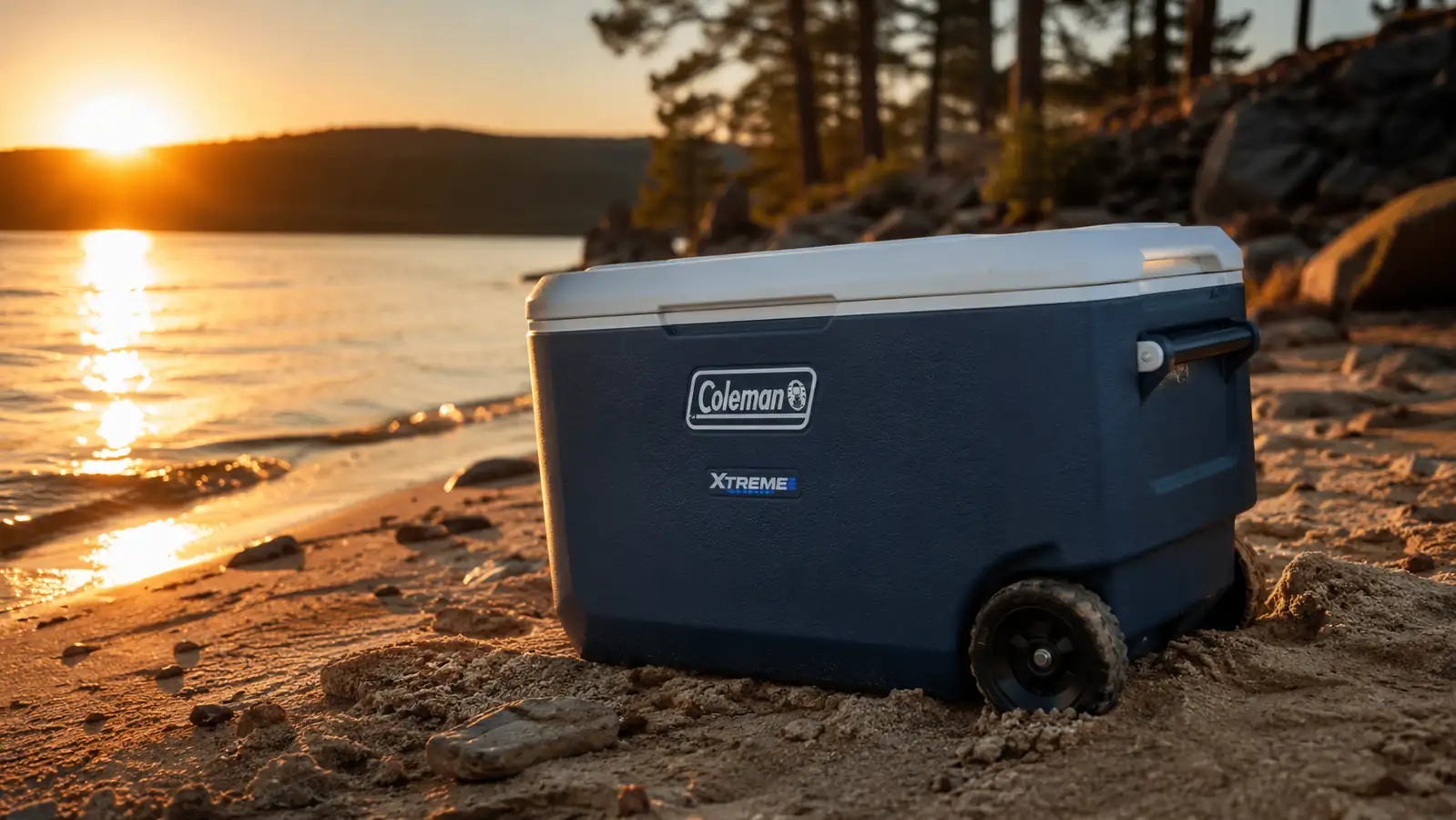
I read something like sixty Amazon reviews before buying the Coleman Xtreme Rolling Cooler, and almost none of them mentioned the stuff that actually mattered once it was loaded up in the driveway. Nobody talks about how much this cooler weighs once it's full, or what the latch sounds like on a rough gravel road, or how the '5 days of ice' claim quietly depends on things the listing never explains. I've had ours since spring, it's been on close to a dozen trips with Dana and the kids, and this is the review I wish I'd found before I bought it.
This isn't a takedown. The Coleman Xtreme has earned a permanent spot in the back of our 4Runner and I'd buy it again. But an honest review means telling you the parts that don't make it into the bullet points on the product page too, the stuff you only notice after you've hauled it up a hill at Robbers Cave or left it in the sun a little too long at Lake Tenkiller. Here's what four months of real use taught me that the marketing copy leaves out.
Quick Verdict
The Quick Verdict
A genuinely capable rolling cooler once you know its real weight, its real ice-retention conditions, and the small rattle in the latch, but the marketing oversells how effortless it is.
Amazon Check Today's Price →Read the reviews. Then read what they leave out.
Before you buy based on star ratings alone, see today's price and current availability of the Coleman Xtreme on Amazon, then decide with the full picture.
Amazon Check Today's Price on Amazon →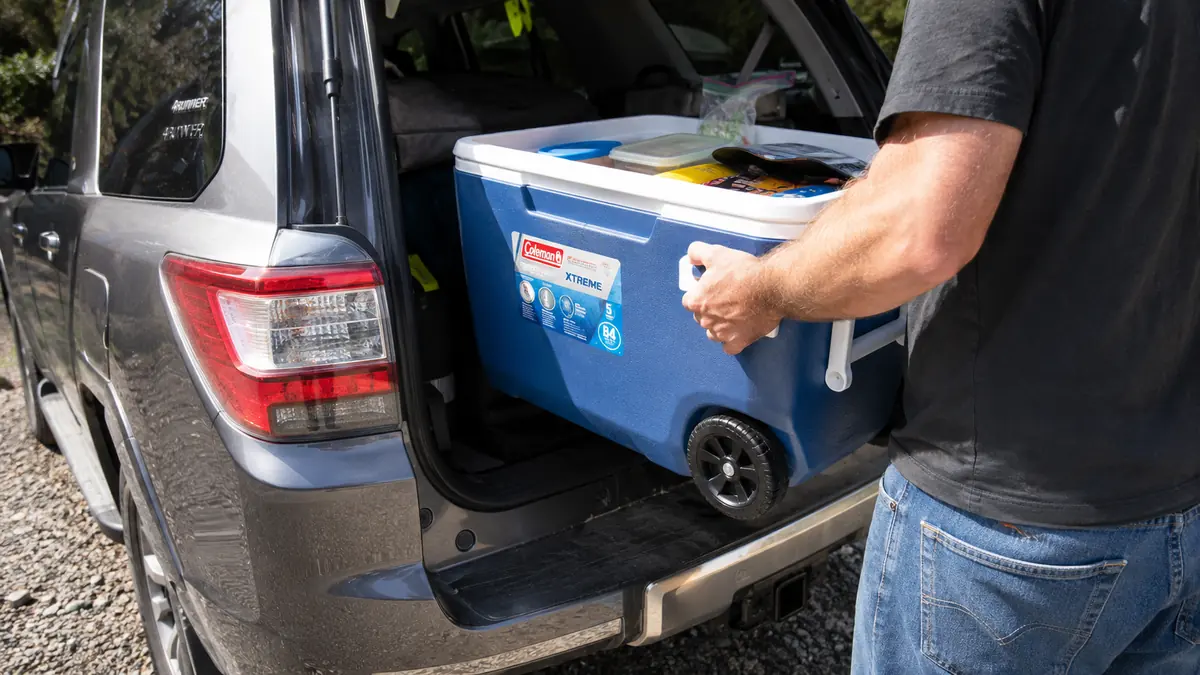
How I've Actually Used It
We're not extreme campers. Dana and I take Nolan and Ivy out for two or three nights at a time, usually to Beavers Bend, Robbers Cave, or a shorter run to Turner Falls or Osage Hills when the weekend's tight. The Coleman Xtreme, in the 70-quart size, has come along on every one of those trips since we bought it, plus a longer haul out to Keystone Lake for a family reunion where it had to feed a lot more than four people.
I'm not grading this cooler off one trip. I've packed it, hauled it, drained it, and repacked it something like eleven times now across a real range of conditions, hot July afternoons, one chilly fall weekend at Osage Hills, and a muddy morning at Turner Falls that tested the wheels more than I expected. The pattern that's emerged isn't dramatic, it's just a list of small things the listing photos don't show you.
That's really what this review is for. If you've already read the specs and you're trying to decide whether the Coleman lives up to them in practice, here's what actually happens once it leaves the box and starts riding in the back of a real vehicle.
Part of why I trusted the Coleman name here is that we already run a Coleman Skydome tent and a Coleman Triton+ stove, and neither has given us any trouble. That history bought some patience when the Xtreme cooler showed a few rough edges early on, since I figured a brand that's held up in the rest of our gear tubs deserved the benefit of the doubt on a rolling cooler too.
The Weight Nobody Mentions in the Product Photos
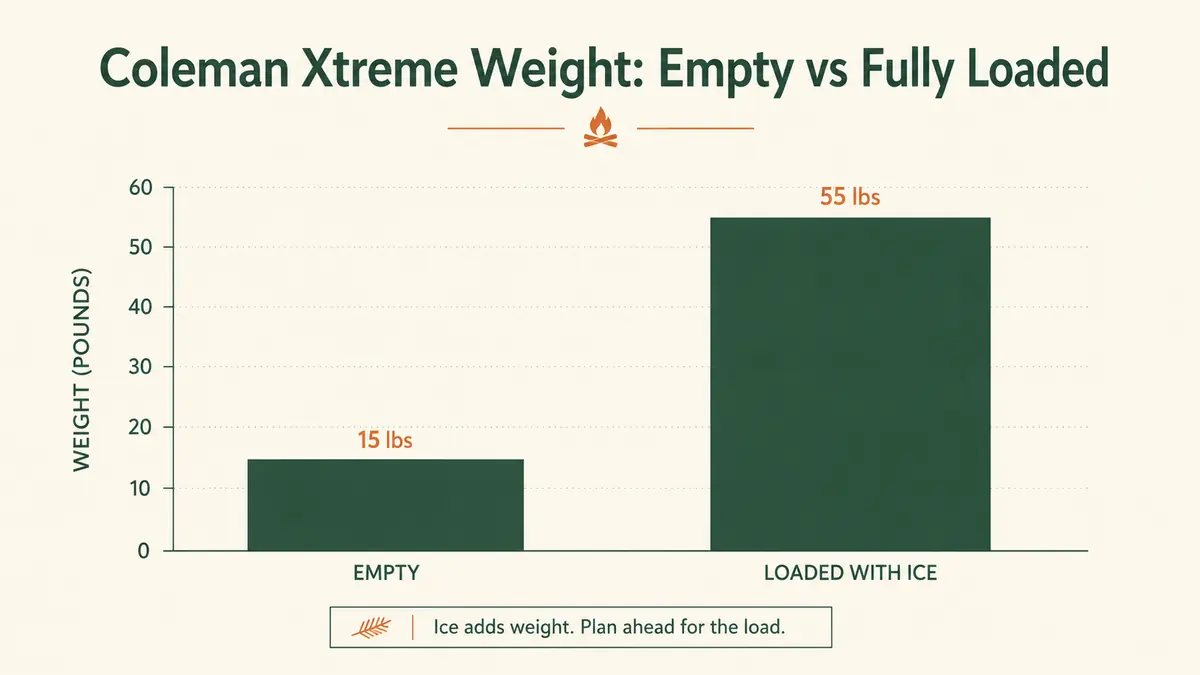
A 70-quart cooler holds a lot of ice, and ice is heavy. Empty, the Coleman Xtreme is manageable, I can pick it up with one hand by the handle and swing it into the 4Runner's cargo area without thinking about it. Loaded for a three-night trip with block ice on the bottom and bagged ice on top, it's a different story. I'd guess it's pushing sixty or seventy pounds once it's full, and lifting that out of the cargo area rather than rolling it takes real effort, not the one-handed swing the marketing photos make it look like.
The wheels are supposed to solve this, and mostly they do, but there's always a moment of lifting involved, getting it up over the tailgate lip, setting it down on uneven ground, hoisting it back in at the end of the trip when it's still got water and a little ice sloshing around inside. Nobody puts that part in the photos. If you've got a bad back or you're the only adult unloading the vehicle, that's worth knowing before you buy, not after.
I've also noticed the weight changes how it handles once you're rolling it. Empty or lightly packed, the wheels glide. Fully loaded, you feel every bit of that ice pulling the handle down, and steering it in a straight line takes more forearm strength than I expected the first time I did it.
By midsummer I'd worked out a system, drain any melted water before lifting the cooler anywhere, since a gallon of water sloshing around adds weight you don't need to carry. It sounds obvious written down, but the first few trips I just muscled the whole thing, ice water and all, straight from the tailgate to the campsite, and my back reminded me about it the next morning. A small adjustment, a real difference.
What 'Keeps Ice Up to 5 Days' Doesn't Tell You
Coleman's claim of up to five days of ice retention is technically true, but it comes with conditions the listing doesn't spell out. It assumes the lid stays shut. It assumes you're not camping in mid-90s heat with the cooler sitting in direct sun. And it assumes you're not opening it every twenty minutes because two kids want a different drink every time they walk past it, which is exactly what happened on our Lake Tenkiller trip.
On that trip, we lost most of our ice by day three, not day five, and it wasn't really the cooler's fault. Nolan and Ivy treated it like a vending machine, and every time that lid popped open, warm air got a chance to work on the ice inside. When I've kept the lid shut and pulled everything I needed in one trip instead of grazing all day, the ice has lasted noticeably longer, closer to what Coleman actually claims.
So the honest version of that five-day number is this, it's achievable, but only if you treat the cooler the way a lab test would, minimal opening, shade, packed tight with headroom for ice rather than crammed with food. That's just not how most family trips actually go, and it's worth adjusting your expectations rather than blaming the Coleman when day three looks worse than the box promised.
On a shorter two-night trip to Robbers Cave where nobody touched the lid except at meal times, the ice barely budged, still mostly solid blocks by the time we packed up. That contrast, vending-machine kids at Lake Tenkiller versus a disciplined couple of adults at Robbers Cave, told me more about how this cooler actually performs than any single number Coleman could print on the box.
The Latch, the Lid, and a Rattle I Didn't Expect
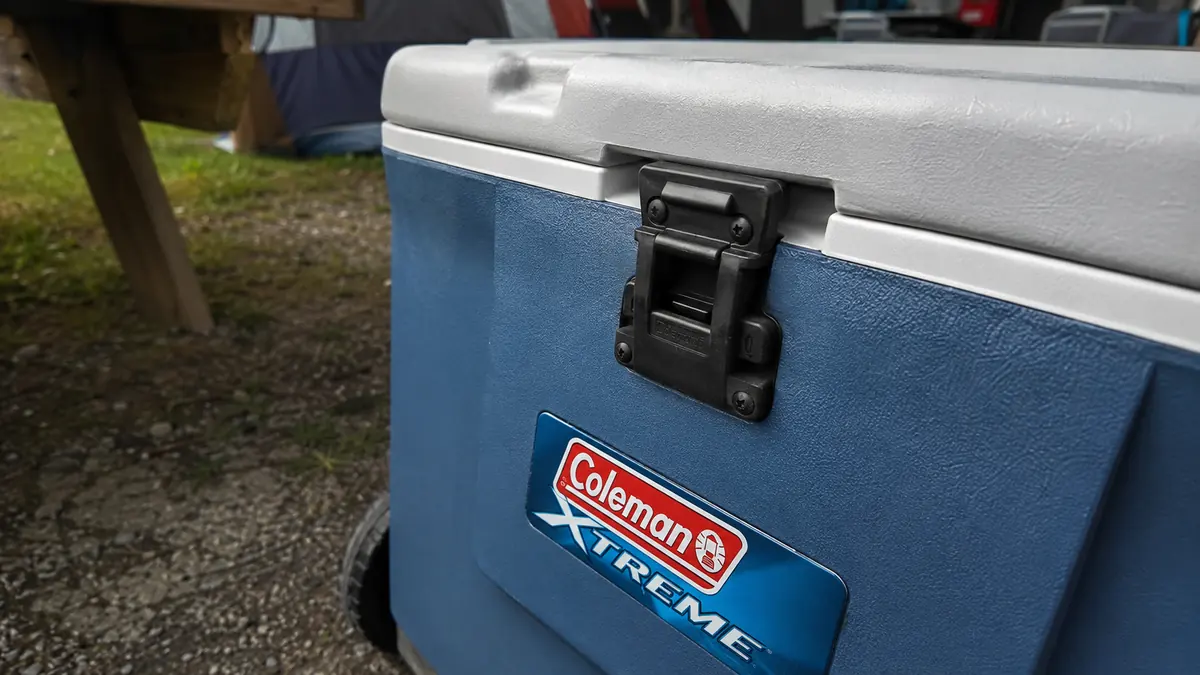
The Coleman Xtreme's lid latches down on both sides, and it holds fine, I've never had it pop open on a rough road. But there's a rattle that started showing up around the second month, a light plastic knock every time we hit a pothole or a washboard section of gravel road heading into Osage Hills. It's not loose enough to worry about the lid actually coming open, but it's a sound I didn't expect from something advertised as rugged, and it's not something any review mentioned before I bought it.
I eventually figured out the rattle gets worse when the cooler isn't packed tight, when there's more empty air space inside than ice and food. Once I started packing it fuller, using a folded towel to fill gaps on shorter trips, the rattle mostly disappeared. It's a minor thing, but if you're the kind of camper who notices every new sound your gear makes on a drive, you'll hear this one.
Where the Wheels Actually Struggle
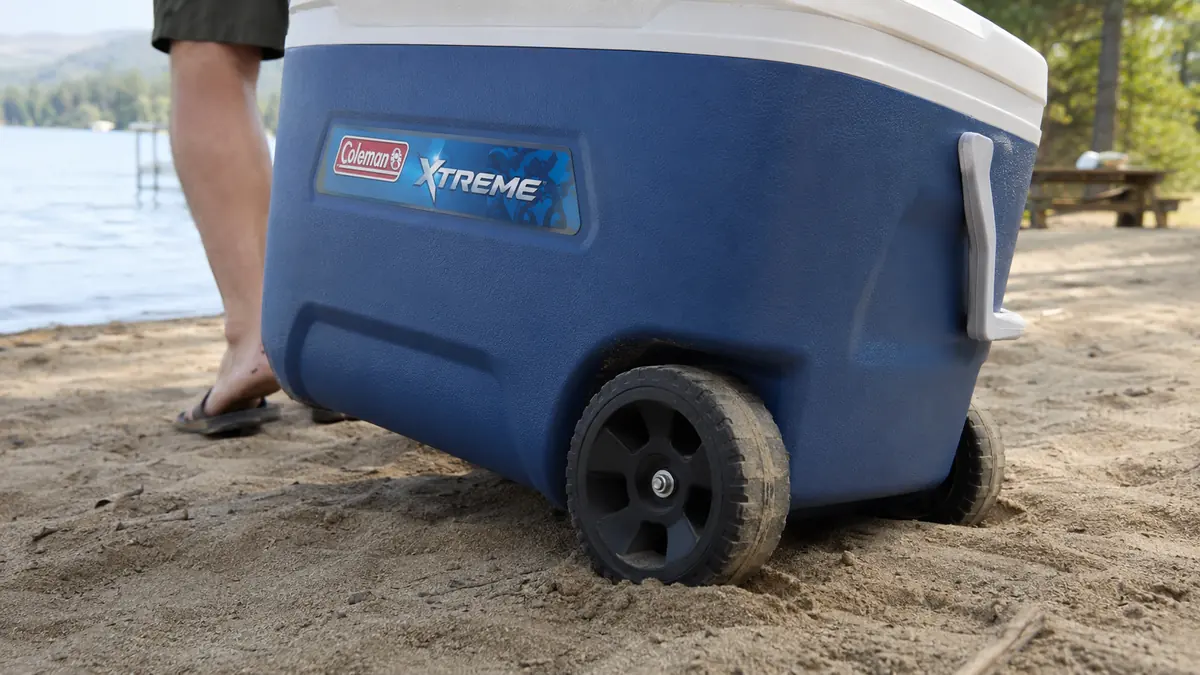
The wheels handle packed dirt and gravel about as well as you'd hope, and I want to be fair to Coleman here, they're a real upgrade over the cheap casters on the cooler we had before this one. But at Keystone Lake, where the walk from the parking area to our site cuts across a stretch of loose sand near the shoreline, the wheels sank in almost immediately and I ended up carrying the whole thing the last thirty yards. That's a tough ask for any wheeled cooler, sand beats most of them, but it caught me off guard because nothing in the listing warns you that sand is where this design gives up.
Stairs are the other spot where the wheels stop helping entirely. A couple of campground check-in areas we've used have a short set of concrete steps between the lot and the registration office, and there's no good way to roll a cooler up or down those, you just have to lift it. It's a small thing, maybe two or three times a season, but it's exactly the kind of detail that separates how a cooler looks in a driveway demo video from how it actually gets used.
On regular gravel and dirt, which is most of what we deal with in northeast Oklahoma, the wheels do their job well enough that I don't think about them. It's really only sand and stairs where you notice the limits, and those are limits of the wheel design generally, not something unique to Coleman doing it worse than anyone else.
I also started checking the axle bolts every few trips after reading enough complaints online about rolling cooler wheels working loose over time. On ours, they've stayed snug through a full season of gravel roads, no wobble, no need to retighten anything myself. That's not nothing, since a wheel assembly that loosens is usually what kills a rolling cooler long before the insulation ever does.
Is the Budget Price a Red Flag or a Selling Point
The Coleman Xtreme costs a fraction of what a premium rotomolded cooler runs, and you can feel that difference in a few places, the plastic on the latch feels a little thinner than I'd like, and the wheel housings aren't the beefy rubberized kind you see on the pricier coolers. None of that has actually failed on us, but it's the kind of thing that makes me treat this cooler with a bit more care than I would a much more expensive one, not tossing it into the truck bed, not letting it get dropped off a tailgate.
What you're actually paying for with a cooler like this is ice retention that's genuinely good enough for how most families camp, three, four, five days, not two weeks in a truck bed on a hunting trip. For that use case, the lower price isn't a red flag, it's just the Coleman Xtreme being honest about who it's built for. If you need the ruggedness of a premium cooler for backcountry or commercial use, this isn't that. For weekend and short-week trips with kids, it's more than enough.
I don't know yet whether this cooler will still be rolling smoothly in three or four years the way a premium one might, we're only a few months in. But for what most families spend on a cooler that gets real use for one camping season out of every year, not year-round commercial abuse, I think the Coleman Xtreme is priced about right for what it actually delivers.
What I Liked
- Wheels handle packed gravel and dirt reliably, a real step up from cheaper casters
- Ice retention holds up close to the 5-day claim if you actually keep the lid shut
- Latch has never failed to hold on rough roads despite a minor rattle
- Low enough profile that kids can grab drinks without help
Where It Falls Short
- Loaded weight is heavier than the product photos suggest, real lifting is still required
- Wheels sink in sand and can't handle stairs, you'll end up carrying it sometimes
- A light plastic rattle develops in the latch area after a few months of gravel roads
- Plastic and wheel housings feel noticeably less rugged than premium rotomolded coolers
The five-day ice claim is real, but only if your kids don't treat the cooler like a vending machine.
Who This Is For
If you camp the way we do, weekend and short-week trips on gravel roads and dirt paths, not sand dunes or stair-heavy sites, the Coleman Xtreme is a genuinely solid honest buy. It keeps ice long enough for a real trip and rolls well enough on the terrain most car campers actually deal with.
Who Should Skip It
If your usual camping spot means dragging gear across sand, up staircases, or you need premium-level ruggedness for heavy commercial or hunting use, this isn't the cooler that's going to make you happy. The Coleman Xtreme is built for family car camping conditions, not the extremes its name implies.
Now you know what the reviews leave out
Weight, wheels, and the real story behind the 5-day ice claim, the Coleman Xtreme still earned its spot in our 4Runner. See today's price on Amazon and decide for yourself.
Amazon Check Today's Price on Amazon →